- Free Consultation: (907) 277-3090 Tap Here to Call Us







Alaska Child Safety


Alaska Child Safety – Learn how Alaska families can prevent childhood injuries at home, school, and outdoors with practical tips for safer spaces, play, and winter activities.
Alaska Child Safety: Preventing Accidents at Home, School, and Outdoors
Children encounter potential safety hazards every day, whether they are at home, attending school, playing outside, or exploring their communities. For Alaska families, changing weather, seasonal darkness, and outdoor recreation create additional considerations for preventing childhood accidents and injuries. By recognizing common hazards and taking practical precautions, parents and caregivers can help create safer environments where children can learn, play, and grow.
Child safety requires more than supervision alone. It also involves identifying potential dangers, maintaining safe surroundings, teaching age-appropriate safety habits, and preparing for changing conditions. From household hazards to playground equipment and winter activities, prevention starts with understanding where accidents can happen.
Home Safety: Recognizing and Preventing Household Hazards
Home should be a safe place for children. However, everyday household items, furniture, appliances, and other familiar surroundings can create unexpected risks. Young children, in particular, may not recognize dangerous situations or understand the consequences of their actions.
Therefore, parents and caregivers should regularly evaluate their homes and address potential hazards before an accident occurs.
Common Household Hazards
Some of the most common household safety concerns include:
- Falls: Unsecured furniture, open stairways, slippery floors, and accessible windows can create fall hazards.
- Poisoning: Medications, cleaning products, chemicals, and certain household substances can cause serious harm if children swallow or touch them.
- Burns and scalds: Hot liquids, cooking surfaces, fireplaces, space heaters, and electrical appliances can cause painful injuries.
- Choking and suffocation: Small objects, toys with loose parts, plastic bags, and other household items can pose serious risks to young children.
- Fire and electrical hazards: Matches, lighters, exposed wiring, overloaded outlets, and unattended heat sources require appropriate safeguards.
- Firearm injuries: Unsecured firearms create a serious risk of accidental injury or death.
Practical Ways to Improve Home Safety
Fortunately, parents and caregivers can take several steps to reduce household injury risks:
- Secure heavy furniture, televisions, and other items that could tip over.
- Install safety gates and window guards where appropriate.
- Store medications, cleaning products, and chemicals in locked cabinets, away from children’s reach.
- Keep hot liquids, sharp objects, and cooking equipment away from young children.
- Use appropriate outlet covers and address damaged electrical cords.
- Keep firearms unloaded and secured in locked storage, separate from ammunition.
- Install and maintain smoke and carbon monoxide alarms.
- Review household emergency plans and make sure children understand age-appropriate safety procedures.
Additionally, make home safety an ongoing priority. As children grow, they gain access to new areas and encounter different hazards. Regularly reviewing household safety measures helps parents address changing risks.
The Alaska Department of Health provides poison prevention information and resources to help families protect children from accidental exposure to dangerous substances. If you suspect poisoning, contact Poison Help at 1-800-222-1222.
School and Childcare Safety: Creating Safer Learning Environments
Children spend a significant part of their day at school or in childcare. Consequently, safe facilities, responsible supervision, and appropriate emergency procedures are essential to protecting their well-being.
Although parents cannot control every aspect of a school or childcare environment, they can ask questions, communicate concerns, and work with educators to support safer settings.
What Makes a School or Childcare Environment Safer?
Several factors contribute to a safer learning environment:
- Appropriate supervision: Teachers and childcare providers should maintain supervision suited to children’s ages, activities, and developmental needs.
- Safe facilities: Classrooms, hallways, bathrooms, playgrounds, and shared spaces should remain clean, maintained, and free of recognized hazards.
- Emergency preparedness: Schools and childcare providers should establish procedures for fires, severe weather, medical emergencies, and other unexpected situations.
- Safe equipment: Toys, classroom materials, furniture, and recreational equipment should remain in good condition and suit the children’s ages.
- Health and hygiene: Proper sanitation, safe food handling, and appropriate medication procedures help protect children’s health.
- Positive school environments: Addressing bullying, harassment, and unsafe behavior helps protect children’s physical and emotional well-being.
How Parents Can Support School Safety
Parents and caregivers can help by maintaining open communication with teachers and childcare providers. Ask about supervision practices, emergency procedures, facility maintenance, and how staff address safety concerns.
Furthermore, encourage children to speak up. They should feel comfortable reporting broken equipment, unsafe behavior, bullying, or situations that make them uncomfortable.
In Alaska, licensed childcare providers must follow health and safety requirements designed to protect children. These standards address areas such as safe facilities, emergency preparedness, hazardous materials, and medication administration. Parents can learn more through the Alaska Department of Health’s childcare safety resources.
Playground Safety: Preventing Injuries During Outdoor Play
Playgrounds provide valuable opportunities for children to develop physical skills, build friendships, and explore their surroundings. However, damaged equipment, unsafe surfaces, and inadequate supervision can increase the risk of falls and other injuries.
Before children begin playing, parents and caregivers should look for obvious hazards and make sure the equipment suits their ages and abilities.
Common Playground Hazards
Some playground conditions can increase the risk of childhood injuries:
- Broken, loose, or poorly maintained equipment.
- Hard surfaces beneath swings, slides, and climbing structures.
- Exposed bolts, sharp edges, and protruding hardware.
- Openings where children could become trapped.
- Equipment designed for older children that younger children cannot safely use.
- Overcrowded play areas and unsafe behavior.
Playground Safety Tips for Parents and Caregivers
To reduce playground injury risks, consider these precautions:
- Inspect playground equipment for damage, loose parts, and other visible hazards.
- Check that protective surfacing surrounds play equipment.
- Direct children toward equipment appropriate for their age and abilities.
- Make sure children understand basic playground rules.
- Supervise young children closely, especially around climbing structures and swings.
- Remove drawstrings, loose accessories, and other items that could become caught in equipment.
Most importantly, do not assume that a playground is safe simply because it is located at a school or public park. Regular maintenance and responsible supervision both matter.
The Consumer Product Safety Commission’s Public Playground Safety Handbook provides additional information about playground hazards, equipment, protective surfaces, and supervision.
Alaska Outdoor Safety: Protecting Children During Recreation
Alaska offers children extraordinary opportunities to explore the outdoors. Families enjoy hiking, camping, fishing, boating, swimming, and countless other recreational activities. However, Alaska’s natural environment can also present hazards that children may not recognize.
For this reason, parents and caregivers should consider the conditions, location, and activity before allowing children to explore independently.
Common Outdoor Safety Concerns
Depending on the season and location, children may encounter:
- Uneven terrain, loose rocks, and steep slopes.
- Rivers, lakes, streams, and other bodies of water.
- Unpredictable weather and rapidly changing temperatures.
- Wildlife and unfamiliar natural surroundings.
- Remote locations where emergency assistance may take longer to reach.
- Recreational equipment that requires age-appropriate instruction and protective gear.
How to Make Outdoor Activities Safer
Before heading outdoors, consider the following precautions:
- Choose activities that match a child’s age, experience, and abilities.
- Explain potential hazards and establish clear boundaries.
- Maintain appropriate supervision, particularly near water and unfamiliar terrain.
- Check weather conditions and prepare for changes.
- Bring appropriate clothing, food, water, and emergency supplies.
- Make sure children wear protective equipment suited to the activity.
- Establish a plan in case someone becomes separated from the group.
In addition, remember that Alaska’s outdoor conditions can change quickly. A familiar location may become hazardous when weather, water levels, or ground conditions change. Parents should reassess conditions throughout an activity rather than relying solely on the original plan.
For families enjoying Alaska’s waterways, properly fitted personal flotation devices and close supervision are essential. The Alaska Department of Health also provides injury-prevention resources through its Injury Prevention Education program.
Alaska Winter Safety: Preventing Cold-Weather Injuries
Winter brings additional safety considerations for Alaska families. Snow, ice, freezing temperatures, and limited daylight can change how children play and interact with their surroundings.
Although outdoor winter activities provide valuable opportunities for exercise and recreation, parents and caregivers should recognize when conditions create unnecessary risks.
Common Winter Safety Hazards
Children may face several cold-weather hazards, including:
- Cold exposure and frostbite.
- Slippery surfaces and falls.
- Unsafe sledding areas.
- Unstable or unsafe ice.
- Snow-covered obstacles and hidden hazards.
- Improperly maintained outdoor play equipment.
Winter Safety Tips for Alaska Families
To help children enjoy winter activities more safely:
- Dress children in appropriate layers, including insulated outerwear, hats, gloves, and winter footwear.
- Check temperatures, wind conditions, and weather forecasts before outdoor activities.
- Inspect sledding areas for trees, fences, rocks, and other obstacles.
- Teach children to avoid frozen lakes, rivers, and ponds unless qualified adults have verified conditions and appropriate safety precautions are in place.
- Inspect playground equipment for snow, ice, and other seasonal hazards.
- Watch for shivering, unusual fatigue, numbness, or other signs of cold exposure.
- Bring children indoors when conditions become unsafe or they show signs of becoming too cold.
Equally important, recognize that winter safety requires ongoing attention. Conditions can change throughout the day, and children may not recognize when they need to stop playing or warm up.
Parents should also remember that outdoor winter recreation requires activity-specific precautions. For example, skiing, snowboarding, and other activities may require properly fitted helmets and additional protective equipment.
Child Injury Prevention Starts With Everyday Awareness
Preventing childhood injuries does not require eliminating every risk from a child’s environment. Instead, parents, caregivers, and educators can make meaningful improvements by recognizing hazards, establishing reasonable safety practices, and responding to changing conditions.
Whether children are at home, attending school, playing on a playground, or enjoying Alaska’s outdoors, responsible supervision and appropriate safety measures can help reduce preventable injuries.
At Johnson Law, we believe protecting Alaska’s children requires awareness and a shared commitment to safety. By working together, families and communities can create safer environments where children have the opportunity to learn, explore, and grow.
Preventing childhood injuries begins with awareness, education, and a shared commitment to safety. Learn how National Child Safety and Protection Month encourages Alaska families and communities to protect children throughout the year.
Keeping children safe starts with recognizing potential dangers before an accident happens.
Johnson Law has been helping Alaskans for nearly 30 years. It’s who we are. Johnson Law is here to help you understand your legal options. Please call us at (907)277-3090 or use our online contact form.
And while we hope you never need us… We’re here if you do. ~ Doug Johnson
Disclaimer: This Child safety Series article is for general educational and informational purposes. However, it is not legal advice and does not create an attorney-client relationship. This information is not a substitute for professional medical advice, safety guidance, or legal advice. Safety recommendations and applicable laws may change. Parents and caregivers should consult qualified professionals and follow current safety guidelines and manufacturer instructions. Johnson Law, P.C. does not guarantee that following these recommendations will prevent accidents or injuries.
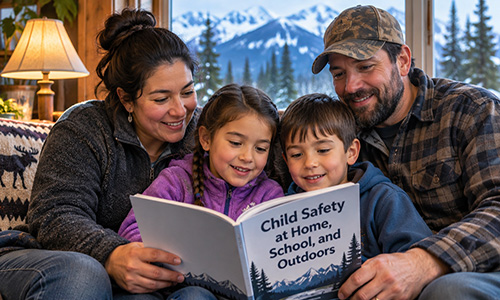
Image generated and modified using ChatGPT – Prompt: An Alaskan family at home enjoying storytime