- Free Consultation: (907) 277-3090 Tap Here to Call Us






Alaska Unseaworthiness Claims


What Is an Alaska Unseaworthiness Claim?
An Alaska unseaworthiness claim arises when a vessel, its equipment, or crew is unsafe for its intended use, causing injury to a maritime worker.
In fact, under general maritime law, vessel owners must ensure their vessel is reasonably fit for its intended purpose. When they fail to meet this duty, injured seamen can pursue compensation.
Unlike negligence claims, you do not need to prove fault – only that the unsafe condition existed and caused your injury.
Who Can File an Unseaworthiness Claim?
Seamen and maritime workers who spend a significant amount of time working on a vessel may qualify to file an Alaska Unseaworthiness Claim.
You may have a valid claim if you:
- Work aboard a commercial fishing vessel, cargo ship, or tugboat
- Contribute to the vessel’s function or mission
- Were injured due to unsafe conditions onboard
This often applies to:
- Commercial fishermen
- Deckhands and crew members
- Offshore oil workers
What Makes a Vessel “Unseaworthy”?
A vessel is considered unseaworthy when any part of it is unsafe, including equipment, crew, or conditions.
Common Examples of Unseaworthiness
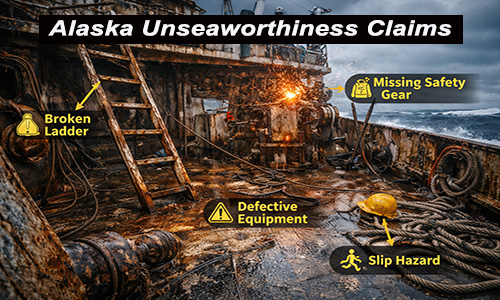
- Defective or poorly maintained equipment
- Slippery or hazardous deck conditions
- Missing safety gear
- Inadequate or untrained crew
- Unsafe work procedures
- Broken ladders, winches, or rigging
Even a temporary unsafe condition can qualify as unseaworthiness.
How These Claims Differ From Jones Act Negligence Claims
Alaska Unseaworthiness and Jones Act negligence claims are closely related but legally distinct.
- Unseaworthiness focuses on the condition of the vessel
- Negligence under the Jones Act focuses on employer fault
You can often bring both claims at the same time, increasing your potential recovery.
What Must You Prove?
To succeed in an Alaska Unseaworthiness Claim, you must show:
- The vessel or its equipment was unfit for its intended use
- The unsafe condition existed at the time of the incident
- The condition caused or contributed to your injury
This is generally easier to prove than negligence because fault is not required.
What Compensation Can You Recover?
Injured maritime workers may recover damages such as:
- Medical expenses (past and future)
- Lost wages and reduced earning capacity
- Pain and suffering
- Disability or long-term impairment
Unseaworthiness claims are often paired with maintenance and cure, which covers basic living expenses and medical care during recovery.
Why Unseaworthiness Claims Matter in Alaska
In places like Alaska, commercial fishing and maritime work are among the most dangerous jobs in the country. Harsh weather, heavy equipment, and long hours increase the risk of unsafe vessel conditions.
When vessel owners cut corners on safety, the consequences can be severe—and unseaworthiness law exists to hold them accountable.
Frequently Asked Questions
Is unseaworthiness the same as negligence?
No. Unseaworthiness focuses on unsafe vessel conditions, while negligence focuses on careless actions.
Can I file both an Alaska Unseaworthiness and a Jones Act negligence claim?
Yes. Many injured seamen pursue both an unseaworthiness claim and a claim under the Jones Act.
Do I need to prove my employer was at fault?
No. You only need to prove the vessel was unsafe and caused your injury.
What if the unsafe condition was temporary?
You can still have a valid claim. Even short-term hazards can qualify.
When Should You Speak With a Maritime Attorney?
You should seek legal guidance as soon as possible after a maritime injury. Evidence can disappear quickly, and vessel owners often act fast to limit liability in Alaska unseaworthiness claims.
An experienced maritime attorney will:
- Investigate unsafe vessel conditions
- Preserve critical evidence
- Maximize your compensation
Bottom Line
Alaska unseaworthiness claims provide powerful protection for injured maritime workers. If a vessel is unsafe and you are hurt as a result, you have the right to pursue compensation—regardless of fault.
If you were injured while working on a commercial fishing vessel, the legal process is difficult. However, good legal guidance will help you recover compensation and protect your future.
Call Johnson Law to discuss your Alaska unseaworthiness claims case: (907)277-3090 or use our online contact form and schedule a free consultation.
Johnson Law has been helping Alaskans for nearly 30 years. It’s who we are.
And while we hope you never need us… We’re here if you do. ~ Doug Johnson
Image generated using ChatGPT – Prompt: Alaska Unseaworthiness Dangers