- Free Consultation: (907) 277-3090 Tap Here to Call Us






Commercial Fishing Dangers In Alaska


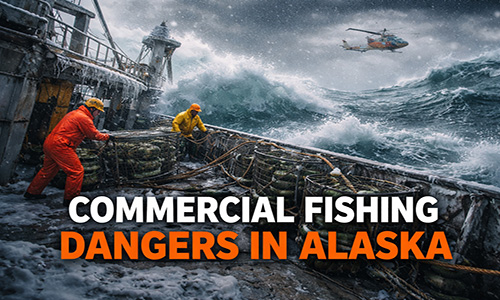
The Centers for Disease Control and Prevention ranks commercial fishing as one of the most dangerous jobs in the United States. Fishermen and crabbers face constant risks. They work in extreme weather. The job demands intense physical labor. Commercial fishermen also endure long, exhausting hours.
Common dangers include drowning, hypothermia, vessel capsizing, and crushing injuries from gear. Because crews often work far offshore without immediate access to emergency services, even minor incidents can quickly become life-threatening. Therefore, commercial fishing and crabbing in Alaska carry a significantly higher risk of severe injury and death than most other occupations.
Consequently, these combined hazards significantly increase the likelihood of serious injuries and fatalities. In 2019, commercial fishermen experienced work-related fatalities at a rate over 40 times higher than the average worker.
How Dangerous Is Commercial Fishing and Crabbing?
Commercial fishing and crabbing are among the most dangerous jobs in the United States. Workers face constant risks from extreme weather, freezing temperatures, rough seas, and heavy equipment.
Furthermore, long hours and physical exhaustion increase the chance of serious mistakes and injuries. Fishing crews often work 16 to 20 hour shifts during peak seasons. Fatigue slows reaction time and increases mistakes. Exhaustion also affects judgment, which can turn routine tasks into dangerous situations.
Commercial fishermen and crabbers often accept extreme risks because of the high earning potential in this multi-billion-dollar industry. However, the job comes with serious dangers, including hypothermia, drowning, loss of limbs, and death.
How Do Injuries Happen in Commercial Fishing and Crabbing?
Injuries happen in many ways during commercial fishing and crabbing. Workers face risks from vessel accidents, such as flooding, capsizing, or being struck by large waves. They can also suffer injuries from heavy equipment, including entanglement in nets, crushing from shifting gear, or machinery malfunctions. In addition, falls overboard, slippery decks, and extreme weather conditions increase the likelihood of serious harm. Long hours and fatigue further raise the risk by slowing reaction time and increasing human error.
Fishing vessels use powerful machinery and heavy gear, including crab pots, nets, and winches. These create serious hazards:
- Entanglement in lines or nets
- Crushing injuries from shifting gear
- Amputations caused by machinery
A single mistake or equipment failure can cause life-altering injuries in seconds.
Most fishing operations take place far from shore. Crews lack immediate access to emergency or rescue services. Help is not immediate. Even with assistance from groups like the United States Coast Guard, response times can be long due to distance and weather. This delay increases the severity of injuries and reduces survival chances.
As a result, commercial fishing and crabbing remain among the most dangerous jobs in the United States.
Why Alaska Is Especially Dangerous?
Alaska’s waters – especially the Bering Sea – are known for sudden storms, high winds, and freezing temperatures. Crews often work in subzero conditions with ice forming on decks and equipment. This increases the risk of slips, falls, and hypothermia. Freezing spray can also make vessels dangerously heavy and unstable.
Fishing in Alaska is more hazardous than in many other regions because of:
- Colder water temperatures
- Rougher seas and unpredictable weather
- Icy conditions on vessels
- Remote fishing grounds
One of the greatest dangers is ending up in the water. Many fatalities occur from:
- Boats capsizing or sinking
- Crew members falling overboard
- Vessel flooding or instability
Cold water shock can incapacitate a person within minutes. Survival time in Alaska’s waters is often extremely short without proper gear.
Final Thoughts
To reduce these risks, captains and crews follow strict safety procedures. In addition, the Jones Act helps protect maritime workers by allowing them to seek compensation when negligence contributes to an injury.
Johnson Law has more than 30 years of combined experience representing victims and families in Commercial Fishing and Maritime cases. We help fishermen, crabbers, and Alaska residents protect their rights. Fighting for the compensation they deserve, Johnson Law has recovered millions of dollars for our clients. Our firm is ready to pursue the maximum recovery in your case.
Commercial Fishing are particularly complex cases and deserve serious representation. Please call Johnson Law to discuss your loss: (907)277-3090 or use our online contact form.
Johnson Law has been helping Alaskans for nearly 30 years. It’s who we are.
And while we hope you never need us… We’re here if you do. ~ Doug Johnson
Image generated using ChatGPT – Prompt: Commercial Fishing Dangers In Alaska