- Free Consultation: (907) 277-3090 Tap Here to Call Us







Home Heating Safety


Home Heating Safety – Alaskan homes use different types of heating sources for the long winters, including heating oil, pellet stoves and electric fireplaces. It is important to understand how alternate heat sources work in providing heat and how to use these sources safely.
Heating Oil
Heating a home with oil is common in many Alaskan homes. There is normally a tank outside of the home or in the basement filled with heating oil regularly. The oil pumps into a chamber where the oil is heats in a circulator or heat exchanger. The heat from the chamber becomes in contact with air or water. The water or air distributes through the house by pipes to baseboards, radiator, or through ducts in the house. Increase home heating safety with regular heating oil tank, fuel lines, and furnace inspections at least once a year – especially before winter. In cold places throughout Alaska, systems run constantly, and small leaks or corrosion can quickly become major problems.
Pellet Stoves
These stoves work like wood stoves except they are fueled by pellets. Pellet fuel sources include sawdust, paper, and bark. Pellet stoves burn very hot and clean due to a reduction of smoke and ash. Additionally, pellet stoves require good ventilation and a source of electricity to work properly. However, pellet stoves produce ash and creosote buildup that can block airflow and increase the risk of fire or carbon monoxide exposure. In cold climates like Alaska’s – where stoves may run continuously – weekly ash removal and a full vent cleaning at least once a year are essential to home heating safety. Ensure that you practice safe use with pellet stoves as the flames are real and can cause injury.
Electric Fireplaces
Electric fireplaces or stoves are common heat sources and often used for additional heating and considered a good alternative for home heating safety. The appeal of electric fireplaces is lowered risk because the flame is not real. On the other hand, items around the fireplace can become very hot and even catch fire. Never store items on top of an electric fireplace and keep at least 3 feet of clearance in front of the unit. Always check that proper ventilation allows good heat distribution.
If you buy a used electric fireplace or stove, ensure that you check the cords for fraying or damage. Do not use units with frayed or damaged cords – these decrease the home heating safety benefit. Plug your electric fireplace directly into a wall outlet – never use an extension cord or power strip. Electric fireplaces draw significant power. Using an extension cord can cause overheating, electrical fires, or tripped breakers—especially during long winter use in places like Alaska.
Home Heating Safety
Home heating safety is especially important throughout Alaska, where long, extreme winters mean heating systems run for months at a time. When equipment operates continuously, the risk of fire, carbon monoxide exposure, and system failure increases. Temperatures can stay below zero for days or even weeks. If a heating system fails, indoor pipes can freeze and burst quickly, causing major property damage and leaving families without shelter during dangerous weather.
Home Heating Safety Benefits
1. Prevents House Fires
Heating equipment is one of the leading causes of residential fires. Furnaces, space heaters, wood stoves, and chimneys can ignite nearby materials if they aren’t properly maintained or spaced. Regular inspections and safe use significantly reduce this risk and increase home heating safety.
2. Protects Against Carbon Monoxide Poisoning
Fuel-burning systems (oil, gas, propane, and wood) can produce carbon monoxide (CO), a colorless, odorless gas that can be deadly. Because CO is impossible to see or smell, it can accumulate unnoticed when furnaces malfunction, vents become blocked, or space heaters are used improperly. As a result, dangerous levels may build up inside the home. Therefore, installing carbon monoxide detectors and scheduling annual equipment servicing are essential steps to increasing home heating safety that can ultimately save lives.
3. Reduces Burn Injuries
Hot surfaces like radiators, wood stoves, and portable heaters can cause serious burns—especially for children and older adults. Keeping safe clearance zones and using protective guards helps prevent injuries.
4. Avoids Freezing and Property Damage
In Alaska, if a heating system fails, indoor plumbing can freeze and burst within hours during severe cold. Safe, well-maintained systems reduce the risk of costly water damage.
5. Lowers Energy Costs
A properly maintained heating system runs more efficiently, not only increasing home heating safety, but also reducing fuel consumption and saving money during long winter months.
Plan ahead – home heating safety considerations are the best way to help avoid potential dangers and ensure a warm winter season.
Johnson Law has been helping injured Alaskans for 30 years. It’s who we are. And while we hope you never need us… We’re here if you do. ~ Doug Johnson
Source(s): SMO, “How Does Oil Heat My Home?” and Fireplace Universe, “24 Things You Need To Know About Pellet Stoves” and Twin Star Home, “Are Electric Fireplaces Safe?“
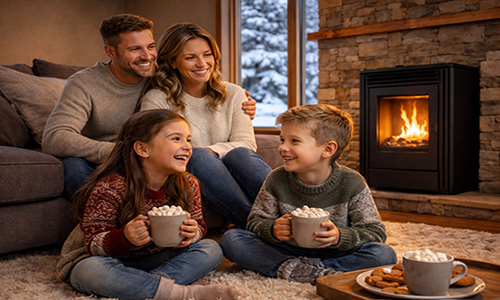
Image created using ChatGPT – Prompt: Family enjoying their warm Alaskan home