- Free Consultation: (907) 277-3090 Tap Here to Call Us






LHWCA: Your Rights After a Maritime Injury


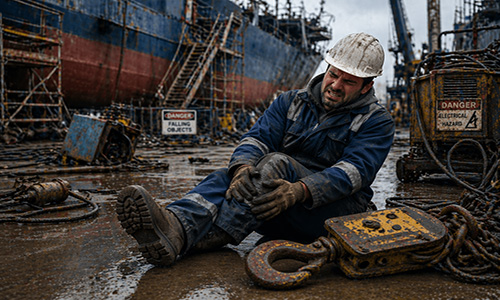
LHWCA or the Longshore and Harbor Workers’ Compensation Act is a federal law that protects maritime workers injured on or near navigable waters – without requiring proof of employer negligence.
Not all injuries in the commercial fishing industry happen at sea or aboard a vessel. Many occur on docks, in shipyards, at processing facilities, or during loading and unloading operations – areas often covered by the Longshore and Harbor Workers’ Compensation Act rather than the Jones Act. Workers injured in these environments – such as gear handlers, processors, and dock crews – may still be entitled to medical care, wage replacement, and rehabilitation benefits even though they are not classified as seamen.
Understanding where an injury occurs is critical, as it directly determines which legal protections and compensation systems apply. If you work on docks, in shipyards, or at marine terminals, LHWCA law may be your primary path to medical care and wage replacement after an injury.
What Is the LHWCA?
Specifically, the LHWCA provides no-fault workers’ compensation benefits to eligible maritime employees. Consequently, it fills the gap between land-based workers’ compensation systems and seamen’s remedies under the Jones Act.
In simple terms:
If you’re not a “seaman” but you’re injured doing maritime work near the water, the LHWCA likely applies.
Who Qualifies for LHWCA Benefits?
In short, LHWCA eligibility hinges on two tests:
1. Status (What you do):
- Longshore workers (loading/unloading vessels)
- Harbor workers
- Shipbuilders and ship repairers
- Marine terminal employees
2. Situs (Where it happens):
- Docks, piers, wharves
- Shipyards
- Terminals and adjoining areas used for maritime activity
Not covered: crew members of vessels are not typically covered under LHWCA (they typically fall under the Jones Act).
What Benefits Are Available?
Medical Care
All reasonable and necessary treatment related to your injury is covered through LHWCA benefits, including hospital visits, surgery, and rehabilitation.
Wage Replacement (Disability Benefits)
Payments depend on the type of disability:
- Temporary Total Disability (TTD): Paid while you cannot work at all
- Temporary Partial Disability (TPD): Paid if you return to limited or lower-paying work
- Permanent Total Disability (PTD): Paid if you cannot return to any employment
- Permanent Partial Disability (PPD): Paid for lasting impairments
Typical LHWCA rate: about two-thirds of your average weekly wage, subject to federal caps.
Vocational Rehabilitation
If you cannot return to your prior job, the LHWCA program may fund retraining or job placement assistance.
What Injuries Are Covered?
The LHWCA covers a wide range of workplace injuries and occupational conditions, including:
- Falls on docks or in shipyards
- Equipment and cargo-handling accidents
- Repetitive stress injuries
- Exposure to hazardous substances
How Is LHWCA Different from the Jones Act?
- LHWCA: No-fault system; you do not need to prove negligence
- Jones Act: Requires showing employer negligence; applies to seamen
- Damages: LHWCA pays set benefits; the Jones Act may allow broader damages like pain and suffering
Can You Sue a Third Party?
Yes. While you generally cannot sue your employer under the LHWCA, you can pursue claims against third parties, such as:
- Equipment manufacturers
- Vessel owners (in certain circumstances)
- Contractors working on-site
This can significantly increase total recovery beyond standard benefits.
Can You Sue a Third Party?
Yes. While you generally cannot sue your employer under the LHWCA, you can pursue claims against third parties, such as:
- Equipment manufacturers
- Vessel owners (in certain circumstances)
- Contractors working on-site
This can significantly increase total recovery beyond standard benefits.
What To Do After a Maritime Injury
- Report the injury immediately to your employer
- Seek medical care and follow treatment plans
- Document everything (photos, witnesses, conditions)
- File a formal claim within required deadlines
- Consult a maritime attorney to protect your benefits
Deadlines You Should Know
- Notice to employer: typically within 30 days
- Filing a claim: generally within 1 year of injury (or last benefit payment)
Missing deadlines can jeopardize your claim, so timing matters.
Why the LHWCA Matters
To sum up, maritime jobs are physically demanding and often hazardous. Therefore, the LHWCA ensures injured workers are not left without support – covering medical care, lost wages, and long-term recovery needs.
For workers in busy ports, shipyards, and remote coastal regions, overall, this law provides a critical financial safety net.
Thus, those injured in one of the most dangerous industries in the country, these benefits can make the difference between stability and hardship after an injury.
Call Johnson Law to discuss your LHWCA claims: (907)277-3090 or use our online contact form and schedule a free consultation.
Johnson Law has been helping Alaskans for nearly 30 years. It’s who we are.
And while we hope you never need us… We’re here if you do. ~ Doug Johnson
Image generated using ChatGPT – Prompt: Injured Shipyard Worker