- Free Consultation: (907) 277-3090 Tap Here to Call Us







Protecting Alaska’s Tourists


What Visitors Need to Know
Protecting Alaska’s Tourists – Alaska welcomes millions of visitors each year. As a result, tourists – from cruise ship passengers to wilderness adventurers – play a vital role in driving the state’s economy. When injuries happen, however, a mix of state, federal, and maritime laws step in to protect visitors. This guide explains those protections in clear terms so travelers – and businesses – understand their rights and responsibilities.
Why Tourist Protection Laws Matter in Alaska
Alaska’s terrain, wildlife, and remote destinations create unique risks. For example, slippery docks, excursion accidents, aviation tours, and wildlife encounters can all lead to injury. Because many visitors are unfamiliar with local conditions, tourist protection laws place strong duties on businesses to keep guests safe.
Tourist protection laws in Alaska aim to:
- Hold businesses accountable for unsafe conditions
- Ensure injured visitors can recover compensation
- Regulate high-risk industries like tourism and transportation
- Provide legal remedies across state, federal, and maritime systems
Alaska Personal Injury Laws Protecting Alaska’s Tourists
Alaska law protects tourists the same way it protects residents. If a visitor suffers an injury due to negligence, they can pursue a personal injury claim.
Key protections include:
1. Duty of Care Protecting Alaska’s Tourists
Businesses must maintain reasonably safe premises. In addition, hotels, tour operators, and transportation providers must inspect for hazards and promptly fix dangerous conditions.
2. Comparative Fault Rule
Under Alaska’s pure comparative negligence system, injured Alaskan tourists can recover damages even if they are partially at fault. The law reduces compensation by the claimant’s percentage of fault, rather than eliminating it altogether.
3. Statute of Limitations
In most cases, injured individuals must file personal injury claims within two years of the injury. Missing this deadline can bar recovery entirely.
Federal Maritime Law and Cruise Ship Protections
Many Alaska tourists arrive by cruise ship. The Tourist Protection Laws regarding cruise ship injury cases often fall under federal maritime law rather than Alaska personal injury state law.
Important maritime laws Protecting Alaska’s Tourists include:
- Duty of Reasonable Care: Cruise lines must keep passengers safe while onboard and during certain excursions
- Shortened Filing Deadlines: Many cruise tickets require notice within 6 months and lawsuits within 1 year
- Jurisdiction Clauses: Claims may need to be filed in specific courts, often outside Alaska
Federal statutes like the Jones Act and the Longshore and Harbor Workers’ Compensation Act primarily protect workers, but they also shape how courts handle maritime injury claims.
Aviation and Excursion Safety Regulations
Flightseeing tours, helicopter trips, and guided excursions are common in Alaska. These activities are regulated by federal and state safety laws.
- The Federal Aviation Administration enforces strict safety standards for commercial flight operators
- Tour companies must follow licensing, training, and operational safety requirements
- Operators must warn participants about known risks and provide proper safety equipment
Failure to follow these rules may lead to liability if a tourist is injured.
Wildlife and Outdoor Liability Laws
Alaska’s natural attractions come with inherent risks. While the state promotes tourism, it also limits liability in certain outdoor situations.
Key legal concepts:
- Inherent Risk Doctrine: Some risks- such as wildlife encounters or rugged terrain – are considered unavoidable
- Waivers and Releases: Tour companies often require liability waivers, though courts may not enforce them if negligence is extreme
- Guide Responsibilities: Licensed guides must still act reasonably and cannot ignore safety standards
Consumer Protection Laws for Tourists
Tourists are also protected under Alaska’s consumer protection laws. Businesses cannot misrepresent services or hide risks.
The Alaska Unfair Trade Practices and Consumer Protection Act prohibits:
- False advertising of tours or accommodations
- Misleading safety claims
- Hidden fees or deceptive practices
Visitors who experience fraud or deception may have additional legal claims beyond personal injury.
What to Do If You Are Injured While Visiting Alaska
If a tourist is injured, taking immediate action helps protect both health and legal rights:
- Seek medical attention right away
- Report the incident to the business or operator
- Document the scene with photos and witness information
- Keep copies of tickets, waivers, and receipts
- Speak with an attorney familiar with Alaska and maritime law
How Alaska Law Protecting Alaska’s Tourists Balances Tourism and Safety
Alaska’s legal framework strikes a balance. It encourages tourism while holding businesses accountable for preventable harm. Whether the case involves a cruise ship, a remote lodge, or a guided excursion, multiple layers of law may apply.
Understanding these protections allows tourists to travel confidently – and ensures businesses maintain high safety standards.
Final Thoughts On Today’s Article
Tourism in Alaska offers unforgettable experiences – but it also carries real risks. When accidents happen, a combination of state law, federal regulations, and maritime rules protects visitors. Knowing your rights ensures you can act quickly and effectively if something goes wrong.
A well-prepared claim not only supports recovery for the injured traveler – it also helps ensure safer practices across Alaska’s thriving tourism industry.
Johnson Law has been serving injured Alaskans and protectinginjured Alaskan Tourists‘ rights for 30 years. It’s who we are. Call Johnson Law at (907)277-3090 or use our Contact Form to discuss your Alaska accident injury case. We are here to serve you.
And while we hope you never need us… We’re here if you do. ~ Doug Johnson
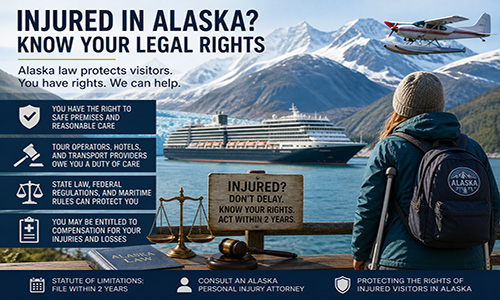
Image created using ChatGPT – Prompt: Protecting Alaska’s Tourists