- Free Consultation: (907) 277-3090 Tap Here to Call Us







Alaska Child Road Safety


Alaska Child Road Safety: Learn how Alaska families can protect young pedestrians and cyclists with practical school travel, bicycle, and winter transportation safety tips.
Child Transportation Safety: Protecting Young Pedestrians and Cyclists
Children face potential dangers whenever they travel near motor vehicles. Whether walking to school, riding a bicycle, waiting for a school bus, or traveling through their neighborhoods, young road users depend on adults to help protect them. In Alaska, limited daylight, winter weather, and roadways without sidewalks create additional child road safety concerns for families.
Child pedestrian and bicycle safety requires awareness from everyone who shares the road. Parents and caregivers can teach children safe travel habits. Schools can encourage safer routes and reinforce traffic safety education. Meanwhile, motorists must remain alert, follow traffic laws, and watch for children near roadways. Together, these efforts can help prevent serious pedestrian and bicycle accidents involving Alaska’s children.
Why Child Road Safety Matters in Alaska
Children do not always recognize traffic hazards or understand how quickly a vehicle can approach. Their smaller stature can also make them harder for motorists to see, particularly when parked vehicles, snowbanks, or other obstacles obstruct visibility.
Additionally, changing seasons in Alaska create challenges for child transportation safety when traveling near roadways. Reduced daylight, snow-covered shoulders, icy sidewalks, and poor weather can make it harder for children and motorists to see one another.
These conditions make child road safety especially important in Alaska. Parents, schools, and motorists should understand the risks children face and take reasonable precautions to prevent accidents.
Helping Children Walk Safely
Walking provides children with opportunities to develop independence, physical fitness, and awareness of their surroundings. However, children need guidance and supervision to recognize traffic hazards and make safe decisions near moving vehicles.
Parents and caregivers play an important role in Alaska child road safety by teaching children basic pedestrian safety habits early and reinforcing them as children become more independent.
Important Pedestrian Safety Rules for Children
Teach children to follow these basic safety precautions when walking near traffic:
- Use sidewalks whenever available. Stay on designated walkways and avoid walking close to moving vehicles.
- Walk facing traffic when sidewalks are unavailable. Stay as far from the roadway as practical.
- Cross at intersections and designated crosswalks. Avoid crossing between parked vehicles or at unexpected locations.
- Stop, look, and listen before crossing. Look left, right, and left again for approaching traffic.
- Obey pedestrian signals. Wait for the WALK signal and check for turning vehicles before entering the roadway.
- Make eye contact with drivers. Never assume a motorist sees you or will stop. Alaska child road safety begins with teaching children pedestrian safety rules and awareness.
- Avoid distractions. Put away phones, headphones, and other devices that interfere with awareness.
- Stay alert in parking lots and driveways. Watch for vehicles entering, exiting, or backing up.
The Alaska Department of Transportation and Public Facilities (DOT&PF) recommends that pedestrians follow traffic rules, use sidewalks when available, cross at designated locations, and remain alert for turning vehicles.
Walking Along Alaska Roads Without Sidewalks
Many Alaska communities have roads without sidewalks or designated pedestrian pathways. Children who walk along these roads face additional risks because they must share limited space with motor vehicles.
Parents should identify the best walking routes for Alaska child road safety whenever possible. When children must walk along roads without sidewalks, teach them to face oncoming traffic and stay as far from vehicles as practical.
Furthermore, adults should consider road conditions, traffic speed, visibility, and available shoulder space before allowing children to walk independently.
For younger children, adult supervision is particularly important. Children may not recognize how quickly traffic approaches or understand how to respond when a vehicle moves unexpectedly.
School Bus Safety: Protecting Children at Bus Stops
School buses provide transportation for thousands of Alaska students. However, children can face serious child transportation safety hazards while waiting for, boarding, and exiting a school bus.
The areas immediately surrounding a school bus can be particularly dangerous. Drivers may have limited visibility near the bus, and children may enter traffic unexpectedly.
School Bus Safety Tips for Children
Alaska Parents and caregivers should teach children the child road safety basics including:
- Wait in a designated location away from the roadway.
- Avoid running or playing near the bus stop.
- Remain visible to the bus driver while waiting to board.
- Wait until the bus comes to a complete stop before approaching.
- Use the handrail when entering or exiting the bus.
- Walk several steps away from the bus after exiting.
- Never walk behind the bus.
- Follow the bus driver’s instructions.
Importantly, children should never retrieve dropped belongings near or beneath a school bus. They should tell the driver and wait for assistance.
Alaska School Bus Laws: What Motorists Need to Know About Child Transportation Safety
Motorists have an important legal responsibility to protect children boarding and exiting school buses.
Under Alaska Statute 28.35.145, drivers approaching a school bus with its required flashing red lights must stop at least 30 feet away. They cannot proceed until the bus moves and the red lights stop flashing.
Additionally, motorists must yield to people crossing the roadway to board or exit a stopped school bus, even when they cross outside a marked crosswalk.
These requirements help protect children during one of their most vulnerable transportation activities. Drivers should slow down near school buses, watch for children, and never attempt to pass a stopped bus illegally.
Child Bicycle Safety: Helping Young Cyclists Stay Safe
Bicycling provides children with exercise, independence, and an enjoyable way to explore their communities. However, riding near motor vehicles requires awareness, preparation, and responsible behavior.
Parents should make sure children understand basic bicycle safety rules before allowing them to ride near traffic.
Essential Bicycle Safety Tips for Children
Children should follow these precautions whenever they ride:
- Wear a properly fitted helmet. A helmet can help reduce the risk of serious head injuries during a bicycle accident.
- Inspect the bicycle. Check the brakes, tires, handlebars, chain, and reflectors before riding.
- Follow traffic laws. Obey traffic signs, signals, and applicable roadway rules.
- Ride predictably. Avoid sudden movements and use appropriate hand signals when turning or stopping.
- Stay alert. Watch for vehicles, pedestrians, opening car doors, and changing road conditions.
- Choose safer routes. Whenever possible, use designated bicycle paths or quieter streets.
- Avoid distractions. Keep phones and headphones out of the way while riding.
The Alaska Department of Motor Vehicles reminds bicyclists that they must follow traffic signs, signals, and other applicable traffic laws. It also recommends helmet use, bicycle maintenance, and proper hand signals.
Bicycle Safety and Driver Awareness
Motorists also have a responsibility to watch for children riding bicycles. Young cyclists may make unpredictable movements, particularly when they encounter obstacles or unfamiliar traffic situations.
Drivers should slow down, check blind spots, and allow adequate space when passing bicyclists. Alaska DOT&PF recommends giving bicyclists at least three feet of clearance when passing.
Additionally, motorists should watch for cyclists at intersections, driveways, and parked vehicles. Children riding bicycles may be difficult to see, particularly in low-light conditions.
Alaska Winter Transportation Safety: Visibility Matters
Alaska’s long winters create additional risks for children walking or bicycling near traffic. Snow, ice, darkness, and changing weather can make roadways more dangerous for everyone.
Reduced daylight is particularly concerning because motorists may have difficulty seeing children wearing dark clothing. Snowbanks and parked vehicles can also obstruct sightlines at intersections and driveways.
Helping Children Stay Visible in Winter
Parents and caregivers can improve children’s visibility by:
- Choosing brightly colored or reflective outerwear.
- Adding reflective strips to backpacks, coats, and other clothing.
- Using flashlights or headlamps when walking in darkness.
- Checking that bicycle lights and reflectors work properly.
- Choosing well-lit walking routes whenever possible.
- Teaching children to make eye contact with drivers before crossing.
However, visibility alone does not eliminate traffic risks. Children should continue following pedestrian safety rules and never assume that motorists can see them.
Additional Precautions for Winter Travel
Winter conditions also require children and motorists to adjust their behavior.
Children should watch for icy sidewalks, snow-covered shoulders, and slippery intersections. Parents should evaluate walking routes regularly because snow removal and changing weather can affect safe passage.
Meanwhile, motorists should reduce speed when conditions deteriorate, increase following distances, clear snow and ice from vehicle windows, and remain especially alert near schools and residential neighborhoods.
For families in Fairbanks, Anchorage, the Mat-Su Valley, and other Alaska communities, these precautions are particularly important during the darkest months.
Motorists Share Responsibility for Child Transportation Safety
Children need guidance to recognize traffic hazards. However, motorists must also take responsibility for preventing pedestrian and bicycle accidents.
Drivers should never assume that children will always follow traffic rules or recognize dangerous situations. Instead, they should anticipate unexpected movements and remain prepared to stop.
Here are several ways motorists can help protect young road users:
- Slow down in residential neighborhoods and school zones.
- Watch for children near parked vehicles, driveways, and intersections.
- Yield to pedestrians in crosswalks as required by law.
- Never pass vehicles stopped at crosswalks.
- Stop for school buses displaying flashing red lights.
- Avoid distractions and never drive while impaired.
- Exercise additional caution in darkness, snow, and poor weather.
According to Alaska DOT&PF, drivers should remain alert for pedestrians and bicyclists at all times. They should also use extra caution when turning, backing up, or driving in areas where children may be present.
What Should You Do After a Child Pedestrian or Bicycle Accident?
Despite careful planning and responsible behavior, accidents can still happen. When a vehicle strikes a child who is walking or riding a bicycle, the consequences can be serious.
If a child is involved in a pedestrian or bicycle accident, take these steps:
- Call 911. Request emergency assistance and report the collision.
- Prioritize the child’s safety. Avoid moving an injured child unless an immediate danger requires it.
- Seek medical attention. Have the child evaluated promptly, even if injuries initially appear minor.
- Document the accident. If possible, collect driver information, witness contact details, photographs, and the responding officer’s information.
- Preserve relevant evidence. Keep photographs, medical records, and other documentation related to the accident.
- Understand your legal options. Consider consulting an Alaska personal injury attorney if a driver’s negligence caused or contributed to the child’s injuries.
Child pedestrian and bicycle accidents can involve complicated liability questions. An investigation may need to consider driver behavior, roadway conditions, visibility, supervision, and other contributing factors.
Parents should also understand that Alaska law provides specific rules for injury claims involving minors. An attorney can explain applicable deadlines and legal options based on the circumstances.
Protecting Alaska’s Children Requires Everyone’s Attention
Child transportation safety is a shared responsibility. Parents and caregivers must teach children safe travel habits, schools must support safe transportation practices, and motorists must remain alert to young pedestrians and cyclists.
At Johnson Law, we understand how devastating a motor vehicle accident can be for an injured child and the entire family. Our practice focuses on representing Alaskans injured through the negligence of others.
We encourage Alaska families to make pedestrian, bicycle, and school transportation safety part of their everyday routines. By recognizing hazards, practicing responsible behavior, and looking out for children near roadways, we can help prevent serious accidents and injuries.
Alaska Child Road Safety begins with a shared commitment to protecting young pedestrians and cyclists. Every child deserves to travel safely through their community, and we all have a role in making that possible.
More Child Safety Information For Families and Caregivers
Preventing childhood injuries begins with awareness, education, and a shared commitment to safety. Learn how National Child Safety and Protection Month encourages Alaska families and communities to protect children throughout the year.
Additionally, recognizing potential hazards is an important first step in preventing childhood injuries. For practical prevention tips, explore Alaska Child Safety: Preventing Accidents at Home, School, and Outdoors.
Johnson Law has been helping Alaskans for nearly 30 years. It’s who we are. Johnson Law is here to help you understand your legal options. Please call us at (907)277-3090 or use our online contact form.
And while we hope you never need us… We’re here if you do. ~ Doug Johnson
Disclaimer: This Child safety Series article, Alaska Child Road Safety, provides general education and information for the safety of Alaska’s children. However, it is not legal advice and does not create an attorney-client relationship. This information is not a substitute for professional medical advice, safety guidance, or legal advice. Safety recommendations and applicable laws may change. Parents and caregivers should consult qualified professionals and follow current safety guidelines and manufacturer instructions. Johnson Law, P.C. does not guarantee that following these recommendations will prevent accidents or injuries.
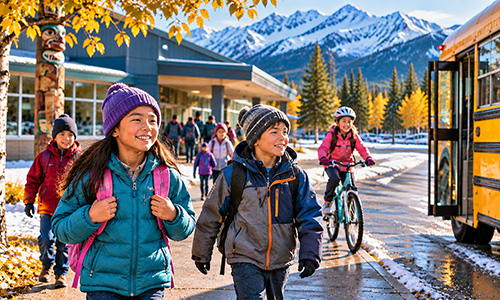
Image generated and modified using ChatGPT – Prompt: Children Arriving Safely At An Alaskan School