- Free Consultation: (907) 277-3090 Tap Here to Call Us






Alaska Driving – Pedestrian Safety


Alaska Driving for Pedestrian Safety: Seeing Pedestrians in Low Light. Learn how Alaska drivers can see pedestrians in low light, use headlights safely, and prevent fall accidents in darkness, rain, and fog.
Alaska Driving For Pedestrian Safety: How to See Pedestrians in Low Light
As fall arrives in Alaska, shorter days make it harder for drivers to see pedestrians on the road. Morning commutes may begin before sunrise, and evening trips often take place after sunset. Rain, fog, frost, and glare from headlights can further reduce visibility, increasing the risk of a serious pedestrian accident.
From Anchorage and the Mat-Su Valley to Fairbanks and rural Alaska, drivers must take extra precautions as daylight decreases. Slowing down, using headlights properly, watching crosswalks, and eliminating distractions can help prevent pedestrian collisions.
Why Is It Harder to See Pedestrians During Alaska’s Fall Season?
Drivers have a harder time seeing pedestrians in fall because of reduced daylight, poor visibility, and changing weather conditions. Darkness reduces the distance at which drivers can recognize people near the roadway. Rain, fog, and glare can make pedestrians even more difficult to see.
Several factors increase pedestrian accident risks during Alaska’s fall season:
- Shorter daylight hours: Drivers encounter more pedestrians during darkness, particularly during morning and evening commutes.
- Dark clothing: Pedestrians wearing dark clothing may blend into the background, especially on unlit streets and rural roads.
- Headlight glare: Oncoming headlights and reflections from wet pavement can make it harder to distinguish pedestrians.
- Rain and fog: Water on the windshield, mist, and fog can reduce visibility.
- Frost and early snow: Changing road conditions may require drivers to slow down and allow more distance to stop.
- Limited street lighting: Some residential streets, rural highways, and roadside walking areas have little or no artificial lighting.
These hazards can occur even on familiar roads. Drivers should never assume they will see a pedestrian in time to stop simply because they know the route. Practice the below safety tips and increase Alaska driving for pedestrian safety.
Alaska Driving For Pedestrian Safety: How Can Drivers See Pedestrians More Clearly in Low Light?
Drivers can improve pedestrian visibility by using headlights correctly, keeping their windshields clean, reducing speed, and actively scanning the roadway.
1. Use Headlights Whenever Visibility Is Reduced
Turn on your headlights when darkness, rain, fog, or other conditions make it difficult to see. Headlights also help other road users recognize your vehicle.
Keep headlights clean and check that all exterior lights work properly. Make sure your windshield, mirrors, and windows are clear before driving.
Use high beams when appropriate on dark roads, but switch to low beams when required for oncoming traffic or when following another vehicle. High beams can create dangerous glare for other drivers and pedestrians.
Remember that headlights have limits. Drive at a speed that allows you to recognize hazards and respond safely within the distance you can see.
2. Slow Down Near Crosswalks and Intersections
Pedestrians may enter a crosswalk, cross between stopped vehicles, or approach an intersection from an area that is difficult to see.
Reduce your speed when approaching intersections, residential streets, parking lots, and other areas where people may cross. Watch carefully before turning left or right, and check for pedestrians who may be crossing in front of your vehicle.
Follow Alaska’s pedestrian right-of-way laws and yield when required. Never assume a crosswalk is empty simply because you do not immediately see someone.
3. Look Beyond the Area Illuminated by Your Headlights
At night, drivers naturally focus on the road directly in front of their vehicles. However, pedestrians may be approaching from sidewalks, driveways, bus stops, or the edges of the roadway.
Scan both sides of the road and watch for movement near parked vehicles, intersections, and roadside paths. Pay particular attention to areas where lighting changes suddenly or shadows obscure the roadway.
Avoid staring directly into oncoming headlights. If glare temporarily affects your vision, reduce speed and maintain a safe position in your lane.
4. Keep Your Windshield and Windows Clean
A dirty windshield can scatter light and increase glare, making pedestrians harder to recognize in darkness or rain.
Before driving, clear your windows and mirrors of frost, ice, and condensation. Check your windshield wipers and replace worn blades. Keep windshield washer fluid suitable for the temperatures you expect to encounter.
Use your defroster to maintain clear windows throughout your trip. Never begin driving with a small cleared area while the rest of the windshield remains obstructed.
5. Eliminate Distractions
Looking at a phone, adjusting navigation, or reaching for an object can take your attention away from the roadway.
Set your navigation and climate controls before leaving. Put your phone away, keep your eyes moving, and remain alert for pedestrians who may enter your path unexpectedly.
Even a brief distraction can matter when a pedestrian appears in low light and you have limited time to react.
6. Allow More Time to Stop
Wet pavement, frost, and ice can reduce traction and increase stopping distances. A pedestrian may also be harder to recognize until your vehicle is relatively close.
Leave additional following distance and avoid sudden braking or steering. Slow down further when road conditions deteriorate, particularly near crosswalks and intersections.
For additional advice on slippery pavement and loss of traction, read our related article, Alaska Black Ice Safety: How to Avoid a Serious Car Accident.
Where Should Alaska Drivers Watch for Pedestrians in Low Light?
Drivers should pay particular attention to locations where people are likely to walk near traffic or cross the road.
- Marked and unmarked intersections: Watch for people preparing to cross and follow applicable right-of-way rules.
- Residential neighborhoods: Children, dog walkers, joggers, and other pedestrians may be near the roadway before sunrise or after sunset.
- Bus stops: People may walk along the road or cross nearby streets to reach a bus stop.
- Parking lots and shopping areas: Pedestrians may emerge from between parked vehicles or walk behind vehicles that are backing up.
- Rural highways: Limited lighting and narrow shoulders can make pedestrians difficult to see.
- School zones: Children may be less predictable and harder to see in darkness. Observe school-zone speed limits and watch for pedestrians near school entrances and crossings.
Drivers should remain alert even when pedestrians are not using a marked crosswalk. The absence of a marked crossing does not mean the roadway is free of pedestrians or that drivers have no legal obligations.
What Should Drivers Do When They See a Pedestrian Near the Road?
When a pedestrian is near the roadway, drivers should reduce speed, prepare to stop when necessary, and give the person adequate space.
Follow these precautions:
- Slow down as you approach a crosswalk or an area with limited visibility.
- Watch for pedestrians entering the roadway from behind parked vehicles.
- Yield as required by Alaska law.
- Avoid passing a vehicle stopped at a crosswalk until you can determine why it stopped and whether proceeding is safe and lawful.
- Do not assume a pedestrian sees your vehicle or understands how quickly you are approaching.
- If you cannot see clearly enough to identify hazards, slow down further or stop in a safe location until conditions improve.
Defensive driving requires anticipating hazards before they become emergencies. A few extra seconds of caution can help prevent a collision.
Alaska Driving For Pedestrian Safety: What Can Pedestrians Do to Help Drivers See Them?
Drivers have an important responsibility to watch for pedestrians, but people walking near traffic can also take steps to improve their visibility.
Pedestrians should consider wearing reflective clothing or accessories, carrying a flashlight, and using designated crossings whenever possible. They should also stay alert, avoid distractions, and check approaching traffic before crossing.
However, drivers should not assume that a pedestrian will always be wearing reflective gear or crossing at a designated location. Drivers must remain attentive and follow applicable traffic laws.
For more information about walking safely during Alaska’s darker months, see our related article on Alaska Pedestrian Safety at Night: How to Stay Visible and Avoid Accidents.
What Should You Do After a Pedestrian Accident in Alaska?
A pedestrian collision can cause serious injuries, even at relatively low vehicle speeds. If you are involved in an accident, prioritize safety and medical care.
- Call 911 when necessary. Request emergency assistance if someone is injured or the scene presents an immediate danger.
- Move out of danger if possible. Avoid standing in active traffic. Follow emergency responders’ instructions.
- Seek medical attention. Some injuries may not be immediately apparent. Get an appropriate medical evaluation after a collision.
- Exchange information. When safe, obtain the driver’s contact and insurance information and identify potential witnesses.
- Document the scene. If safe to do so, photograph the roadway, crosswalk, lighting, vehicle damage, and surrounding conditions.
- Keep relevant records. Save medical records, photographs, receipts, and communications related to the accident.
- Notify the appropriate insurer. Report the collision as required and provide accurate information.
If you have questions about fault, insurance coverage, or an injury claim, consider consulting an Alaska personal injury attorney.
Who May Be Responsible for a Pedestrian Accident in Alaska?
Responsibility for a pedestrian accident depends on the circumstances, including the conduct of the driver and pedestrian, visibility, traffic conditions, and applicable law.
A driver may face liability if negligent conduct, such as failing to yield when required, driving too fast for conditions, or failing to watch for pedestrians, contributes to an injury. However, poor visibility does not automatically establish fault, and the circumstances of each collision must be evaluated.
Alaska follows comparative-fault principles that can affect a person’s ability to recover damages and the amount recoverable. The application of these rules depends on the facts and applicable law.
If you or a family member has been injured in a pedestrian collision, an attorney can help explain potential legal options, relevant insurance coverage, and the claims process.
Alaska Driving For Pedestrian Safety: Stay Alert as Daylight Decreases
Shorter fall days create additional challenges for drivers and pedestrians throughout Alaska. Increase your Alaska driving for pedestrian safety. Drivers can help prevent collisions by using headlights properly, slowing down, watching crosswalks, keeping windows clear, and eliminating distractions.
As temperatures fall, remember that reduced visibility may coincide with frost, wet pavement, and early snow. Allow extra time to reach your destination, check road conditions before traveling, and adjust your driving to the conditions.
For more seasonal preparation advice, read our article, Autumn Vehicle Care: Prepare Your Car for an Alaska Winter.
Johnson Law, P.C. represents people injured in motor vehicle accidents throughout Alaska. We investigate serious crashes and help injured Alaskans understand their legal rights and options. If you are injured in a crash, it is important that you hold the negligent person responsible. Please call Johnson Law to discuss your claims: (907)277-3090 or use our online contact form.
Johnson Law has been helping Alaskans for nearly 30 years. It’s who we are. And while we hope you never need us… We’re here if you do. ~ Doug Johnson
Disclaimer: This article series provides general educational information about preparing your vehicle for a safer fall and winter in Alaska. However, it is not legal advice and does not create an attorney-client relationship. Because every case is unique, consult a qualified Alaska personal injury attorney about your specific circumstances.
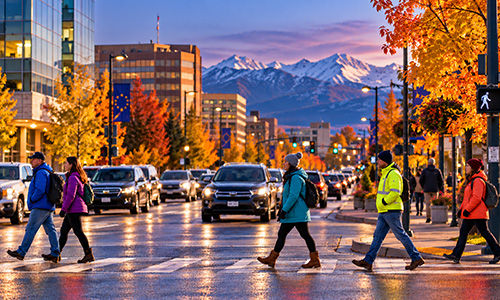
Image generated and modified using ChatGPT – Prompt: Anchorage citizens safely walking busy traffic areas of Anchorage on a fall morning