- Free Consultation: (907) 277-3090 Tap Here to Call Us






Alaska Homeowners Insurance Exclusions


Alaska Homeowners Insurance Exclusions – Learn what Alaska homeowners insurance may not cover, including floods, earthquakes, wear and tear, water damage, exclusions, and coverage gaps.
What Homeowners Insurance Does Not Cover in Alaska
Having homeowners insurance does not mean every type of damage to your Alaska home will receive coverage. Most Alaska homeowners insurance policies contain exclusions, limitations, deductibles, and conditions that can significantly affect a claim.
Some risks receive little or no coverage under a standard homeowners policy. Other losses may require an endorsement or a separate insurance policy.
Common Alaska Homeowners Insurance Exclusions
Common exclusions and coverage limitations can include flooding, earthquakes, normal wear and tear, certain maintenance problems, sewer backups, and certain types of water damage. The exact exclusions depend on the policy.
Understanding these coverage gaps before a loss occurs can help Alaska homeowners make informed insurance decisions and avoid unpleasant surprises when they file a claim.
1. Flood Damage
Standard homeowners insurance generally does not cover damage caused by flooding.
Flooding can occur when water enters a home from sources such as:
- Rising rivers or streams
- Coastal or storm surge
- Heavy rainfall
- Rapid snowmelt
- Other forms of surface water
Alaska homeowners near rivers, coastal areas, or other flood-prone locations should understand whether their existing insurance provides any protection against flood damage.
Homeowners who need flood protection generally must obtain separate flood insurance.
The distinction between flooding and other types of water damage can become important when an insurer evaluates a claim.
2. Earthquake Damage
Alaska experiences significant seismic activity, yet standard homeowners insurance may exclude earthquake damage.
Earthquake coverage may require a separate policy or endorsement, depending on the insurer and policy.
Earthquake-related losses can include more than damage to the house itself. A significant earthquake can damage foundations, structures, personal property, and other parts of a residence.
Because earthquake damage can be extremely expensive, Alaska homeowners should review their policies carefully rather than assume their standard homeowners coverage protects them.
3. Normal Wear and Tear
Homeowners insurance generally does not function as a maintenance plan. Thus normal wear and tear is typically an Alaska homeowners insurance exclusion.
Insurance typically does not cover ordinary deterioration that occurs over time, such as:
- Aging roofs
- Worn flooring
- Deteriorating siding
- Aging appliances
- Gradual deterioration
- Routine maintenance problems
Insurance generally responds to covered losses rather than the ordinary cost of maintaining a home.
This distinction can become important when an insurer determines that damage resulted from a long-term condition rather than a sudden covered event.
4. Neglect and Lack of Maintenance
A homeowner generally has a responsibility to maintain the property and take reasonable steps to prevent avoidable damage.
An insurer may question coverage when damage results from neglect, deferred maintenance, or a condition the homeowner knew about but failed to address.
For example, a homeowner who ignores a known roof leak may have difficulty obtaining coverage for extensive damage that develops over time.
That does not mean an insurer can automatically deny every claim involving an older home or existing condition. The specific facts and policy language matter.
5. Certain Water Damage
Water damage can create complicated homeowners insurance claims because not all water damage has the same cause or coverage.
A policy may cover some sudden and accidental water losses while excluding or limiting others.
Potential coverage questions can arise with:
- Gradual leaks
- Groundwater
- Flooding
- Sewer backups
- Drain backups
- Poor maintenance
- Long-term moisture problems
- Water entering through excluded causes
When water damages an Alaska home, determining where the water came from and why it entered the property can be critical.
6. Sewer or Drain Backups
A sewer or drain backup can cause extensive damage to floors, walls, furniture, and personal belongings.
Standard homeowners insurance may not provide coverage for every sewer or drain backup. Some policies offer the option to add specific coverage through an endorsement.
Homeowners should check their policies to determine whether they have this protection and how much coverage they purchased.
This can be particularly important for homeowners with finished basements or properties where a backup could cause substantial damage.
7. Certain Damage Caused by Mold
Mold coverage can be complicated.
A homeowners policy may provide coverage when mold results from a covered loss, depending on the policy and circumstances. However, policies may exclude or limit mold associated with long-term moisture, poor maintenance, or other excluded causes.
For example, a long-standing moisture problem may receive different treatment from mold that develops after a sudden covered water loss.
Because mold exclusions and limitations vary, homeowners should review the actual policy rather than assume that all mold damage receives the same treatment.
8. Certain Pest and Animal Damage
Homeowners insurance generally does not cover every type of damage caused by animals or pests.
Damage associated with insects, rodents, birds, or other animals may fall outside standard coverage, particularly when the damage develops gradually.
Alaska homeowners should also consider the potential for wildlife-related property damage.
The insurer may distinguish between sudden accidental damage and damage that results from an ongoing infestation or maintenance issue.
9. Intentional Damage
Homeowners insurance generally does not provide coverage for intentional property damage caused by the insured.
Insurance is designed to protect against covered accidental losses, not deliberate acts.
Intentional acts can create complicated coverage questions when multiple people live in the household or when someone other than the homeowner causes the damage. The policy language and specific circumstances determine whether coverage applies.
10. Certain Business-Related Losses
A standard homeowners policy may provide limited protection for property or activities associated with a home-based business, but it may not cover every business-related loss.
Homeowners who operate a business from their Alaska residence should determine whether their homeowners policy provides adequate protection.
Depending on the business, additional insurance may be necessary for:
- Business equipment
- Inventory
- Business liability
- Customers or clients visiting the property
- Professional activities
- Other business-related risks
A homeowner should not assume that a personal homeowners policy provides the same protection as commercial insurance.
11. Certain High-Value Personal Property
Homeowners insurance can cover personal property, but policies often place special limits on certain categories of valuable belongings.
These limits can apply to property such as:
- Jewelry
- Cash
- Collectibles
- Certain firearms
- Precious metals
- Other valuable items
For example, a homeowner may have substantially more valuable jewelry than the policy’s standard special limit covers.
Additional coverage or a scheduled-property endorsement may provide broader protection for valuable possessions.
12. Damage From Certain Earth Movement
Earthquake damage is not the only type of earth movement that can create coverage questions.
Standard homeowners policies may exclude certain losses involving events such as:
- Landslides
- Mudslides
- Sinkholes
- Other forms of earth movement
The precise definition and treatment of these events varies by policy.
Alaska homeowners with property near steep slopes, unstable ground, or other areas vulnerable to earth movement should understand how their policies address these risks.
13. Damage From War or Nuclear Events
Homeowners policies generally contain exclusions for certain extraordinary events, including war and nuclear hazards.
These exclusions are unlikely to affect most everyday Alaska homeowners insurance claims. However, they illustrate an important principle:
A homeowners policy does not provide unlimited protection against every possible cause of loss.
The policy defines both the risks it covers and the circumstances it excludes.
14. Certain Losses Caused by Power Outages
A power outage does not automatically create a covered homeowners insurance claim.
Coverage can depend on what caused the outage and what damage resulted from it.
For example, a homeowner may face different coverage questions when food spoils during a routine utility outage than when an electrical event causes covered property damage.
Homeowners should review their policy and any applicable endorsements rather than assume that all losses following a power outage receive coverage.
Do Alaska Homeowners Insurance Exclusions Include Alaska’s Snow, Ice, and Extreme Cold?
Alaska’s climate creates several potential sources of property damage.
Heavy snow and ice can contribute to roof damage, falling trees, structural problems, and other losses. Extreme cold can also create plumbing problems.
But homeowners insurance does not automatically cover every loss caused by Alaska’s weather.
An insurer may examine whether the damage resulted from a sudden covered event, an excluded cause, inadequate maintenance, or a combination of factors.
That makes documentation particularly important after a major weather-related loss.
Why Do Insurance Companies Deny Homeowners Claims?
An insurer may deny a claim for several reasons.
Common issues can include:
- The policy excludes the cause of loss.
- The damage falls below the deductible.
- The policy limit does not cover the full loss.
- The insurer disputes the cause of damage.
- The insurer considers the damage gradual rather than sudden.
- The insurer believes the homeowner failed to take reasonable precautions.
- The policy does not provide the particular coverage involved.
- The homeowner did not satisfy a policy condition.
A denial does not automatically mean the insurer correctly interpreted the policy.
The language of the policy and the facts surrounding the loss matter.
What Should You Do If Your Homeowners Claim Is Denied?
If your insurance company denies your Alaska homeowners insurance claim, start by carefully reviewing the denial letter.
Pay particular attention to:
- The reason for the denial
- The policy provisions the insurer cites
- Any exclusions the insurer relies upon
- The amount of your deductible
- The insurer’s explanation of what caused the damage
- Any deadlines for responding or appealing
Keep photographs, repair estimates, receipts, correspondence, and other documentation relating to the claim.
If you believe the insurer incorrectly interpreted the policy or improperly denied coverage, consider obtaining legal advice before accepting the denial or signing a settlement.
Frequently Asked Questions About Alaska Homeowners Insurance Exclusions
What does homeowners insurance not cover in Alaska?
Common exclusions and limitations can include flooding, earthquakes, normal wear and tear, neglect, certain water damage, sewer backups, certain earth movement, and some business-related losses. Coverage varies by policy.
Does homeowners insurance cover flooding in Alaska?
Standard homeowners insurance generally does not cover flood damage. Homeowners who need flood protection typically need separate flood insurance.
Does homeowners insurance cover earthquakes in Alaska?
A standard homeowners policy may exclude earthquake damage. Separate earthquake insurance or an endorsement may be available depending on the policy and insurer.
Does homeowners insurance cover an old roof?
Homeowners insurance generally does not cover normal deterioration or routine maintenance. However, a sudden covered event may cause damage to an older roof that receives coverage depending on the policy and circumstances.
Does homeowners insurance cover mold?
It depends on the cause of the mold and the policy. Some policies provide limited coverage when mold results from a covered loss, while excluding or limiting mold associated with long-term moisture or other excluded causes.
Does homeowners insurance cover sewer backups?
Not necessarily. Some homeowners policies exclude sewer or drain backups unless the homeowner purchases additional coverage or an endorsement.
What happens if homeowners insurance does not cover my damage?
You may have to pay for the loss yourself unless another insurance policy or source of recovery applies. If you believe your insurer incorrectly denied a claim, an attorney can review the policy and the circumstances of the loss.
Protecting Yourself From Homeowners Insurance Coverage Gaps
The best time to discover a coverage gap is before a loss occurs.
Alaska homeowners should periodically review their policies and consider whether their coverage still reflects their property, possessions, and risks.
Pay particular attention to:
- Dwelling coverage limits
- Personal property limits
- Liability limits
- Deductibles
- Valuable-property sublimits
- Flood coverage
- Earthquake coverage
- Sewer and drain backup coverage
- Other endorsements
- Policy exclusions
Your insurance needs can change over time. Home improvements, new possessions, changes in property use, and other circumstances can affect the amount and type of coverage you need.
Know Your Policy Alaska Homeowners Insurance Exclusions
Homeowners insurance can provide important protection, but no standard homeowners policy covers every possible loss.
For Alaska homeowners, understanding exclusions and coverage gaps can be just as important as knowing what the policy covers. Flooding, earthquakes, wear and tear, certain water damage, sewer backups, and other risks may require additional protection.
If you suffer significant damage and your Alaska homeowners insurance company denies your claim, delays payment, or disputes coverage, do not assume the insurer’s decision is necessarily correct.
An attorney can review the policy, the cause of the loss, the insurer’s explanation, and the available evidence to determine whether you may have grounds to challenge the decision.
Johnson Law, P.C. represents Alaskans in insurance coverage disputes and other legal matters. Our office can review your insurance policy, the circumstances of your loss, and the insurer’s position to help determine what options may be available.
Disclaimer: This week’s article series provides general educational information about Homeowners Insurance In Alaska, Alaska Homeowners Insurance Claims and Alaska Homeowners Insurance Exclusions. However, it is not legal advice and does not create an attorney-client relationship. Because every case is unique, consult a qualified Alaska personal injury attorney about your specific circumstances.
Johnson Law, P.C. has been helping injured Alaskans and those injured while visiting Alaska for 30 years. It’s who we are. And while we hope you never need us… We’re here if you do. ~ Doug Johnson
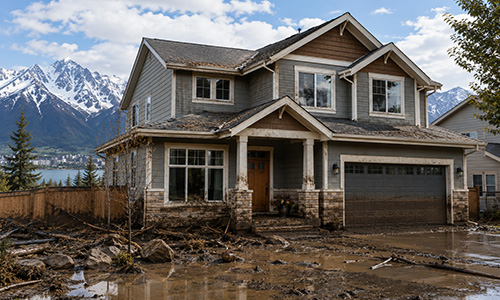
Image modified using ChatGPT – Prompt: An Alaskan home damaged by flood