- Free Consultation: (907) 277-3090 Tap Here to Call Us








Alaska MedPay Coverage


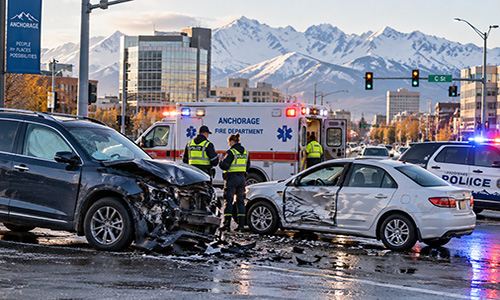
Alaska MedPay Coverage: Learn how Medical Payments Coverage can help pay medical expenses after a car accident, regardless of fault, for covered drivers, passengers, and pedestrians. A thorough Alaska fall vehicle maintenance checklist includes an insurance coverage review.
Alaska Medical Payments Coverage After a Car Accident
If you suffer injuries in an Alaska car accident, Medical Payments Coverage, or MedPay, may help pay your covered medical expenses without first determining who caused the crash.
MedPay is an optional type of auto insurance coverage. Alaska’s Division of Insurance explains that it can pay hospital, medical, and funeral expenses for people injured or killed while in a covered vehicle. Depending on the policy, MedPay can also cover the insured, family members, or other insured people when they are in another vehicle or injured as pedestrians.
Because MedPay does not depend on establishing negligence in the same way bodily injury liability coverage does, it can provide an important source of coverage after an Alaska car accident.
What Is Alaska MedPay Coverage?
Medical Payments Coverage is optional auto insurance coverage that can pay covered medical expenses resulting from an automobile accident, subject to the policy’s limits, terms, and exclusions.
Unlike bodily injury liability coverage, MedPay generally can pay covered medical expenses without first determining whether another driver was negligent.
MedPay may help pay expenses such as:
- Hospital treatment
- Medical services
- Ambulance services
- Other covered medical expenses
- Funeral expenses in circumstances covered by the policy
The exact expenses covered and the amount available depend on the specific insurance policy.
Does Alaska Require MedPay Coverage?
No. MedPay is optional auto insurance coverage in Alaska.
Alaska requires minimum liability insurance for covered vehicles, but the Alaska Division of Insurance lists MedPay as optional coverage.
That means not every Alaska driver has MedPay.
If you suffer injuries in a car accident, review your auto insurance policy to determine whether it provides MedPay coverage.
How Does Alaska MedPay Coverage Work After an Alaska Car Accident?
MedPay generally works differently from a bodily injury liability claim.
With a liability claim, the injured person typically seeks compensation from the insurance of the driver who was legally responsible for causing the accident.
With MedPay, the policy may provide benefits for covered medical expenses without first determining who caused the accident.
For example, suppose you are injured in an Alaska car accident and your medical treatment begins immediately. If your auto policy includes MedPay, that coverage may help pay covered medical expenses while questions about fault and liability are still being investigated.
This can be particularly important when an accident involves disputed liability or multiple insurance policies.
Does MedPay Cover Injuries Regardless of Who Caused the Crash?
Generally, yes, subject to the policy’s terms and exclusions.
Alaska’s Division of Insurance specifically explains that MedPay can make payments without a determination of negligence.
That means MedPay may be available whether:
- Another driver caused the accident
- You caused the accident
- Fault is disputed
- The accident involved only one vehicle
- The accident involved multiple vehicles
The policy still controls the coverage. MedPay does not automatically cover every injury or expense simply because an accident occurred.
Who Does MedPay Cover?
The people covered by MedPay depend on the applicable policy.
Alaska’s Division of Insurance states that MedPay can apply to the insured, family members, and others insured under the policy when they are:
- In the insured vehicle
- In another vehicle
- Injured as a pedestrian after being struck by a vehicle
This makes MedPay different from coverage that applies only to a particular vehicle.
Does Alaska Medical Payments Insurance Cover Passengers?
Yes, MedPay can cover passengers in a covered vehicle.
The Alaska Division of Insurance explains that MedPay may pay medical and hospital expenses for people injured while in the insured vehicle.
For example, if you are riding as a passenger in a friend’s vehicle and suffer injuries in a crash, MedPay under an applicable policy may provide coverage.
The specific policy determines who qualifies as an insured and what benefits are available.
Related Article
Alaska Car Crash Passenger Injuries
This article provides additional information about insurance and legal issues that can arise when a passenger is injured in an Alaska car accident.
Does Alaska MedPay Coverage Protect Family Members?
Potentially.
Alaska’s Division of Insurance states that MedPay can apply to the insured and family members when they are in another vehicle or are injured by a vehicle as pedestrians.
Whether a particular family member qualifies as an insured depends on the policy’s definitions and other applicable terms.
This can become important when a family member is injured while:
- Riding in another person’s vehicle
- Riding in a family member’s vehicle
- Walking as a pedestrian
- Riding as a passenger
An insurance policy should be reviewed before assuming that coverage does or does not apply.
Does MedPay Cover You in Someone Else’s Car?
It may.
Alaska’s Division of Insurance specifically states that MedPay may apply to the insured, family members, or others insured under the policy when they are in another vehicle.
This means MedPay can be broader than coverage tied only to the vehicle listed on the policy.
For example, if you are injured while riding in a friend’s vehicle, your own MedPay coverage may potentially apply depending on the policy.
Other insurance may also be available.
Does Alaska Medical Payments Insurance Cover Pedestrian Injuries?
MedPay may cover an insured person who is injured by a motor vehicle while walking as a pedestrian.
The Alaska Division of Insurance expressly includes pedestrian injuries among the circumstances in which MedPay can apply to an insured, family member, or other insured person.
This can be particularly important when a person is injured outside a vehicle and initially assumes that auto insurance cannot apply.
Other insurance coverage, including U/UIM coverage, may also be relevant depending on the circumstances.
Related Article
Alaska Uninsured and Underinsured Motorist Coverage
Learn how U/UIM coverage may apply when an uninsured or underinsured driver causes injuries to a driver, passenger, or pedestrian.
Does MedPay Cover a Single-Vehicle Accident?
MedPay may provide coverage after a single-vehicle accident, subject to the policy’s terms.
Because MedPay generally does not depend on determining who was negligent, it can be relevant even when no other vehicle was involved.
For example, if a passenger is injured in a single-vehicle crash, MedPay may help pay covered medical expenses.
If the driver is injured, MedPay may also be relevant if the driver qualifies as an insured under the policy.
Other insurance coverage should also be considered. A single-vehicle crash does not necessarily mean that MedPay is the only potentially applicable coverage.
How Much Does MedPay Cover?
The amount available depends on the MedPay limit selected under the applicable policy.
For example, a policy might provide a specific amount of MedPay coverage per person. The available limit can affect how much of a person’s covered medical expenses the policy may pay.
Your declarations page should identify whether you have MedPay and the applicable coverage limit.
The policy itself provides the details concerning covered expenses, exclusions, conditions, and other limitations.
Does MedPay Pay Medical Bills Directly?
MedPay is designed to pay covered medical expenses, but the exact process for submitting and paying a claim depends on the policy and insurer.
After an accident, the insurance company may request:
- Medical bills
- Medical records
- Proof of the accident
- Other documentation supporting the claim
Alaska’s Division of Insurance advises consumers to contact their insurer promptly after an accident, provide requested information, and keep records of expenses and paperwork.
Can I Use MedPay If I Have Health Insurance?
Potentially, yes.
Having health insurance does not necessarily mean you cannot have or use MedPay coverage.
The Alaska Division of Insurance specifically recommends that consumers with health insurance ask their health insurer how it may coordinate or share payment with MedPay coverage.
The interaction between health insurance and MedPay can depend on the applicable policies and circumstances.
For that reason, it is important to understand which coverage is being used to pay medical expenses and whether another insurer may have reimbursement or coordination rights.
Does MedPay Pay for Pain and Suffering?
Generally, MedPay is designed to pay covered medical and related expenses rather than compensate for pain and suffering.
Pain and suffering is generally addressed as part of a bodily injury claim rather than a MedPay benefit.
For example, if another driver causes your accident, you may have a bodily injury claim against that driver’s liability insurance. Depending on the circumstances, you may also have U/UIM coverage.
MedPay serves a different purpose: it provides benefits for covered medical expenses under the applicable policy.
Related Article
Alaska Liability Insurance After a Car Accident
Learn how liability insurance may cover claims when another driver is legally responsible for causing an Alaska car accident.
What Is the Difference Between MedPay and Liability Insurance?
The two coverages serve different purposes.
| Coverage | General purpose |
|---|---|
| Liability insurance | May cover claims against an insured who is legally responsible for causing injuries or property damage to another person |
| MedPay | May pay covered medical expenses for an insured person without requiring a determination of negligence |
| U/UIM coverage | May provide protection when an insured is injured by an uninsured or underinsured motorist |
MedPay can therefore become useful even when fault is disputed.
What Is the Difference Between MedPay and U/UIM Coverage?
MedPay and U/UIM coverage also serve different purposes.
MedPay focuses on covered medical expenses under the applicable policy.
U/UIM coverage addresses injuries caused by an uninsured or underinsured motorist and may provide coverage for damages beyond medical expenses, depending on the policy and applicable law.
A person injured in an Alaska car accident may potentially have access to both.
For example, an injured person might use applicable MedPay coverage for covered medical expenses while also pursuing a U/UIM claim arising from an uninsured or underinsured driver’s conduct.
Can I Have MedPay and U/UIM Coverage?
Yes. A policy can include both MedPay and U/UIM coverage.
The coverages serve different purposes and may both become relevant after an accident.
For example:
- MedPay may address covered medical expenses.
- U/UIM may address damages arising from an uninsured or underinsured driver’s conduct.
The applicable policy determines the limits and conditions of each coverage.
What If the Other Driver Has No Insurance?
If another driver causes your accident and has no insurance, U/UIM coverage may become important.
Your MedPay coverage may also provide benefits for covered medical expenses if you have that coverage.
These coverages are not substitutes for one another.
MedPay can address covered medical expenses, while U/UIM coverage may address damages associated with an uninsured or underinsured motorist.
Related Article
Alaska Uninsured and Underinsured Motorist Coverage
Learn more about U/UIM coverage and how it may apply when the driver responsible for an accident has no insurance or insufficient insurance.
What If the Other Driver Has Insurance?
MedPay may still be relevant even when another driver has liability insurance.
For example, if another driver causes a crash, you may have:
- A liability claim against the responsible driver’s insurance.
- MedPay coverage under an applicable policy.
- U/UIM coverage if the responsible driver’s insurance is insufficient to cover your damages.
The availability of each type of coverage depends on the policies and circumstances involved.
What If I Was Injured by a Family Member?
An injured person may hesitate to make an insurance claim when a family member caused the accident.
Insurance coverage can provide an important distinction.
A claim for available insurance benefits does not necessarily mean that an injured person is personally pursuing money from a family member.
If an applicable auto policy provides MedPay coverage, the policy may pay covered medical expenses regardless of who caused the accident, subject to its terms.
The same principle can apply when the driver is a friend or acquaintance.
What Should I Do After an Alaska Car Accident?
After an Alaska car accident, take reasonable steps to protect your health and preserve information about your claim.
Seek medical attention
Get appropriate medical care after the crash and follow your healthcare provider’s recommendations.
Report the accident when required
Alaska law requires drivers to report accidents resulting in death, injury, or at least $2,000 in property damage to police.
Notify your insurance company
Contact your insurer as soon as reasonably possible and ask what information or documentation it requires. Alaska’s Division of Insurance recommends contacting the insurer promptly after an accident.
Keep your records
Keep copies of:
- Medical bills
- Medical records
- Prescription expenses
- Insurance correspondence
- Accident reports
- Photographs
- Wage-loss documentation
- Other accident-related expenses
Review your insurance policies
Check your declarations page and policy to determine whether you have:
- MedPay
- U/UIM coverage
- Liability coverage
- Other potentially applicable coverage
Do not assume that only the insurance covering the vehicle involved in the accident matters.
Can an Insurance Company Deny a MedPay Claim?
An insurer may dispute whether a particular expense or injury falls within the applicable policy’s coverage.
The policy determines the coverage, exclusions, conditions, and applicable limits.
If an insurer disputes a MedPay claim, carefully review the reason for the denial and the policy language on which the insurer relies.
Alaska’s Division of Insurance provides consumer resources concerning insurance claims and explains that, for a first-party claim that is not in dispute, an insurer generally must pay the undisputed portion within 30 working days after receiving the required claim documentation or other acceptable evidence of loss.
How an Alaska Personal Injury Attorney Can Help
MedPay may appear straightforward, but insurance coverage can become more complicated when an accident involves serious injuries, multiple policies, disputed liability, family members, passengers, or uninsured drivers.
An Alaska personal injury attorney can review:
- The accident circumstances
- Your auto insurance policy
- MedPay limits
- U/UIM coverage
- Liability insurance
- Medical bills and records
- Lost income
- Other applicable insurance
- Insurance correspondence
- Settlement offers
- Coverage disputes
Reviewing all potentially applicable insurance can help identify sources of coverage that might otherwise be overlooked.
Frequently Asked Questions About Alaska Medical Payments Coverage
What is MedPay insurance in Alaska?
Medical Payments Coverage, or MedPay, is optional auto insurance coverage that can pay covered hospital, medical, and funeral expenses for qualifying insured people after an automobile accident. Alaska’s Division of Insurance states that payment can be made without a determination of negligence.
Is MedPay required in Alaska?
No. MedPay is optional coverage. Alaska requires minimum liability insurance for covered vehicles, but MedPay is not part of the state’s mandatory minimum auto insurance coverage.
Does MedPay cover medical bills after a car accident?
MedPay may pay covered medical expenses resulting from an automobile accident, subject to the applicable policy’s limits, terms, and exclusions.
Does MedPay cover passengers?
Yes, MedPay can cover qualifying passengers injured while occupying a covered vehicle. The exact coverage depends on the applicable policy.
Does MedPay cover family members?
Potentially. Alaska’s Division of Insurance states that MedPay can apply to the insured and family members in another vehicle or when injured as pedestrians, depending on the policy.
Does MedPay cover you when you are in someone else’s car?
It may. Alaska’s Division of Insurance states that MedPay can apply to insured people when they are in another vehicle. The policy determines who qualifies as an insured and what coverage applies.
Does MedPay cover pedestrians?
MedPay may cover an insured person who is injured by a motor vehicle as a pedestrian. The applicable policy determines whether the person qualifies for coverage.
Does MedPay cover a single-vehicle accident?
MedPay may cover qualifying injuries from a single-vehicle accident because payment generally does not depend on determining who caused the accident. Coverage remains subject to the policy’s terms and limits.
Does MedPay cover pain and suffering?
MedPay generally pays covered medical and related expenses rather than pain and suffering. Pain and suffering may instead be part of a bodily injury claim when another party is legally responsible for the accident.
Can I use MedPay if I have health insurance?
Potentially. The Alaska Division of Insurance recommends asking your health insurer how it coordinates or shares payment with MedPay coverage.
Can I use MedPay if another driver caused the accident?
Yes, potentially. MedPay generally does not require a determination of negligence, so it may provide benefits even when another driver caused the crash.
Can I use MedPay if I caused the accident?
Potentially. Because MedPay generally does not depend on determining negligence, it may provide covered benefits to an insured person even when that person caused the accident, subject to the policy’s terms.
How much MedPay coverage should I have?
The appropriate amount depends on your circumstances, health insurance, finances, and the limits available under your auto policy. Review the limits and terms with your insurance professional before selecting coverage.
Related Alaska Auto Insurance Articles
Start with the broader guide to liability, U/UIM, and Medical Payments Coverage after an Alaska car accident: Alaska Auto Insurance Coverage After a Crash
Learn how liability insurance works when another driver is legally responsible for causing your injuries: Alaska Liability Insurance After a Car Accident
Learn how U/UIM coverage may protect injured Alaskans when the responsible driver has no insurance or insufficient insurance: Alaska Uninsured and Underinsured Motorist Coverage
Johnson Law, P.C. represents people injured in motor vehicle accidents throughout Alaska. We investigate serious crashes and help injured Alaskans understand their legal rights and options. If you are injured in a crash caused by a distracted driver, it is important that you hold that person responsible for their negligence. Please call Johnson Law to discuss your loss: (907)277-3090 or use our online contact form.
Johnson Law has been helping Alaskans for nearly 30 years. It’s who we are. And while we hope you never need us… We’re here if you do. ~ Doug Johnson
Disclaimer: This article series provides general educational information about driving safety in Alaska. However, it is not legal advice and does not create an attorney-client relationship. Because every case is unique, consult a qualified Alaska personal injury attorney about your specific circumstances.
Image generated and modified using ChatGPT – Prompt: Serious Vehicle Accident in Anchorage, Alaska