- Free Consultation: (907) 277-3090 Tap Here to Call Us







Alaska Summer Driving Safety


12 Essential Tips for Safer Travel on Alaska Roads
Alaska Summer Driving Safety – Summer is one of the best times to explore Alaska. As a result, visitors and residents alike travel thousands of miles to experience the state’s mountains, glaciers, wildlife, fishing, hiking, and world-famous national parks. While longer days and warmer weather make driving more enjoyable, summer also brings unique hazards that increase the risk of motor vehicle accidents.
Whether you’re commuting in Anchorage, driving the Seward Highway, exploring Denali National Park, or taking a scenic drive along the Glenn or Richardson Highway, understanding Alaska’s seasonal driving conditions can help keep you and your passengers safe.
What Makes Summer Driving in Alaska Different?
Quick Answer:
Summer driving in Alaska presents challenges many drivers do not expect. Indeed, heavy tourist traffic, road construction, wildlife crossings, long distances between services, rapidly changing weather, gravel roads, and driver fatigue all contribute to crashes. Staying alert, planning ahead, and adjusting your driving to road conditions will significantly reduce your risk of an accident.
1. Watch for Wildlife at All Times
Moose, caribou, bears, and other wildlife frequently cross Alaska highways during the summer months. Furthermore, moose are particularly dangerous because of their size and height. A collision with a moose can cause severe injuries or fatalities.
To reduce your risk:
- Slow down in areas with wildlife warning signs.
- Scan both sides of the roadway.
- Use extra caution during early morning and evening hours.
- Never swerve suddenly to avoid an animal if doing so could cause you to leave the roadway or collide with another vehicle.
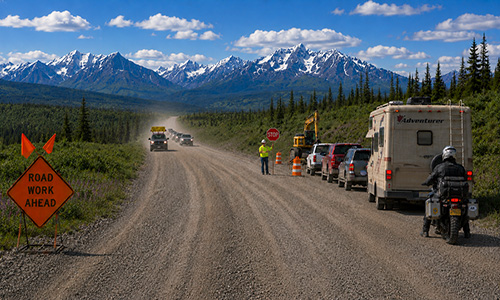
2. Expect Road Construction
Alaska’s short construction season means road crews work throughout the summer to repair highways and bridges. Make planning for unexpected delays and detours part of your Alaska summer driving safety plan.
Construction zones often include:
- Narrow lanes
- Uneven pavement
- Loose gravel
- Flaggers
- Reduced speed limits
- Sudden traffic stops
Slow down and allow extra following distance whenever you enter a work zone.
3. Share the Road For Everyone’s Alaska Summer Driving Safety
Many summer visitors are unfamiliar with Alaska’s highways and may drive more slowly, stop unexpectedly to photograph scenery or wildlife, or make last-minute turns.
Drive patiently and anticipate unpredictable actions from unfamiliar drivers. Avoid aggressive driving and pass only when it is clearly safe.
4. Slow Down on Gravel Roads
Many popular Alaska destinations require driving on gravel or partially improved roads.
Loose gravel reduces traction and increases stopping distances. Rocks thrown by passing vehicles can also damage windshields.
Reduce your speed and leave additional space between your vehicle and others.
5. Never Drive While Fatigued
Alaska’s nearly endless summer daylight can make drivers underestimate how tired they have become.
Fatigue slows reaction time and impairs judgment much like alcohol.
Take regular breaks, switch drivers when possible, stay hydrated, and stop for the night if you become drowsy.
6. Stay Prepared for Changing Weather
Sunny skies can quickly give way to heavy rain, dense fog, or smoke from nearby wildfires.
Before traveling:
- Check the weather forecast.
- Monitor road conditions.
- Turn on your headlights during rain or reduced visibility.
- Slow down whenever traction becomes limited.
Never assume summer weather will remain consistent throughout your trip.
7. Give Motorcyclists and Bicyclists Extra Space
Summer brings significantly more motorcycles and bicycles onto Alaska roads.
Drivers should:
- Check mirrors and blind spots carefully.
- Allow at least three feet when passing cyclists.
- Watch carefully before turning left.
- Expect motorcycles to be less visible than larger vehicles.
A few extra seconds of caution can prevent a devastating collision.
8. Avoid Distracted Driving To Increase Alaska Summer Driving Safety
Beautiful scenery can be distracting enough without adding cell phones or GPS devices.
If you want to photograph wildlife or enjoy a scenic overlook, pull completely off the roadway into a safe parking area.
Never text, browse your phone, or attempt to take photographs while driving.
9. Keep a Safe Following Distance
Summer traffic often becomes congested near popular destinations including Seward, Homer, Denali, Valdez, and Kenai.
Maintain at least a three-second following distance under ideal conditions and increase that distance when towing a trailer, driving an RV, or traveling on gravel or wet roads.
10. Prepare for Remote Travel
Many Alaska highways pass through isolated areas where fuel stations, medical services, and cellular coverage may be limited.
Increase your Alaska summer driving safety – always carry:
- Drinking water
- Snacks
- A first-aid kit
- Flashlights
- Jumper cables
- Basic tools
- Emergency blankets
- A fully charged phone and charging cable
Before leaving, let someone know your route and estimated arrival time.
11. Buckle Every Passenger
Seat belts remain one of the most effective ways to prevent serious injuries during a crash.
Before every trip, confirm that:
- Every passenger is properly restrained.
- Children are secured in age-appropriate child safety seats.
- Loose cargo is safely stored to prevent it from becoming a projectile during sudden stops.
12. Alaska Summer Driving Safety Includes Driving Defensively Every Mile
Defensive driving means expecting the unexpected.
Remain alert for:
- Sudden stops
- Wildlife
- Construction equipment
- Slow-moving RVs
- Passing vehicles
- Changing weather
- Pedestrians
- Cyclists
Adjust your speed to road conditions rather than simply following the posted speed limit.
Enjoy Alaska More With An Alaska Summer Driving Safety Plan
Summer driving in Alaska offers unforgettable scenery and extraordinary adventures, but every trip deserves careful preparation. Staying alert, respecting changing road conditions, watching for wildlife, and driving defensively can help keep you and your loved ones safe.
Whether you’re heading to Anchorage, the Kenai Peninsula, Denali, Valdez, Fairbanks, or anywhere in between, safe driving allows you to spend more time enjoying Alaska and less time dealing with preventable accidents.
Planning an Alaska road trip? Learn how to prepare for travel on Alaska’s unique roads and highways and discover practical ways to help prevent serious accidents in our companion articles:
- Alaska Summer Driving Checklist – Prepare Your Vehicle for a Safe Road Trip; and
- Alaska Summer Road Trip Safety – Essential RV And Travel Tips
If you have been seriously injured in an Alaska accident, contact Johnson Law, P.C. We help injured Alaskans and those injured while visiting Alaska understand their rights and we fight for the compensation they deserve. Please call Johnson Law to discuss your case: (907)277-3090 or use our online contact form.
Johnson Law, P.C. has been helping injured Alaskans and those injured while visiting Alaska for 30 years. It’s who we are. And while we hope you never need us… We’re here if you do. ~ Doug Johnson
Image generated using ChatGPT – Prompt: Alaska Scenic Summer Driving Roadwork