- Free Consultation: (907) 277-3090 Tap Here to Call Us







Alaska Car Seat Safety


Alaska Car Seat Safety: Learn how Alaska parents can choose, install, and use the right car seat or booster to help protect children and prevent serious injuries.
Alaska Car Seat Safety: Choosing and Using the Right Child Restraint
Every child deserves protection during every vehicle trip. However, a standard seat belt does not provide the right fit for every young passenger. Children need restraints designed for their size, age, and physical development.
Alaska car seat safety begins with choosing the right child restraint and using it correctly every time. From rear-facing infant seats to booster seats, each stage provides important protection as children grow. Parents and caregivers can help prevent serious injuries by understanding restraint options, following installation instructions, and complying with Alaska’s child passenger safety laws.
Why Proper Child Restraints Matter
Children’s bodies are still developing. Their heads, necks, and bones need additional protection during a motor vehicle collision. A properly selected and installed child restraint helps distribute crash forces and limit movement.
However, simply placing a child in a car seat does not guarantee proper Alaska car seat safety. The seat must fit the child, work with the vehicle, and meet the manufacturer’s installation requirements.
Additionally, parents should use the appropriate restraint on every trip, regardless of distance. A collision can happen close to home just as easily as on a longer drive.
Understanding the Different Types of Child Restraints
Children need different restraints as they grow. The safest approach is to keep a child in each type of seat for as long as possible, within the manufacturer’s height and weight limits.
Rear-Facing Car Seats
Rear-facing car seats provide important support and Alaska car seat safety for an infant’s head, neck, and spine. During a collision, the seat cradles the child’s body and helps distribute crash forces across the back of the restraint.
Parents should keep children rear-facing for as long as possible, until they reach the seat’s maximum height or weight limit for that position.
Common options include:
- Infant-only seats: Designed specifically for infants and used only in the rear-facing position.
- Convertible seats: Allow children to ride rear-facing and later convert to a forward-facing position.
- All-in-one seats: Offer multiple configurations as children grow, depending on the model.
A convertible or all-in-one seat may allow a child to remain rear-facing longer than an infant-only seat.
Forward-Facing Car Seats
Once a child outgrows the rear-facing limits, the next stage is generally a forward-facing car seat with a harness.
These seats use a built-in harness to secure the child. Many also include a top tether that connects to an anchor in the vehicle. The tether helps limit forward movement during a collision increasing Alaska car seat safety for toddlers and children.
Keep children in a forward-facing harness seat until they reach the manufacturer’s maximum height or weight limit for that position. Do not move a child to a booster simply because they reach a particular age.
Booster Seats
After outgrowing a forward-facing harness seat, many children need a booster. A booster raises the child so the vehicle’s lap-and-shoulder belt fits properly.
The lap belt should rest across the upper thighs, not the stomach. The shoulder belt should cross the center of the chest and shoulder, not the neck or face.
A booster helps position the seat belt across stronger areas of the child’s body. Continue using one until the vehicle seat belt fits correctly without it for proper Alaska car seat safety.
The National Highway Traffic Safety Administration (NHTSA) provides guidance for choosing car seats and booster seats as well as proper installation for both.
Vehicle Seat Belts
Children can transition to a regular seat belt when it fits properly without a booster. Age alone does not determine whether a child is ready.
Check the fit with the child sitting all the way back against the vehicle seat:
- The child’s knees should bend comfortably at the edge of the seat.
- The lap belt should rest across the upper thighs, not the stomach.
- The shoulder belt should cross the chest and shoulder, not the neck or face.
- The child should remain seated properly throughout the trip.
If the belt does not fit correctly, continue using a booster seat.
NHTSA also recommends keeping children in the back seat through at least age 12.
Alaska Child Passenger Safety Laws
Alaskan law requires drivers to properly secure children under age 16 in an appropriate child safety device or seat belt. Alaska Statute 28.05.095 establishes requirements based on a child’s age, height, and weight.
The law generally requires:
- Children under one year old: A rear-facing child safety seat.
- Children one year or older but under four who weigh at least 20 pounds: An appropriate child restraint device.
- Children over four but under eight: A booster seat or qualifying restraint when they are under 57 inches tall and weigh at least 20 but less than 65 pounds.
- Children over four who exceed the height or weight requirements for the booster-seat provision: A seat belt.
- Children eight to under 16: An appropriate child safety device or seat belt, depending on the child’s size and the driver’s determination under the statute.
The law also requires drivers to secure children according to the restraint manufacturer’s instructions to improve Alaska car seat safety.
Importantly, legal minimums do not always represent the safest time to move a child to the next restraint. For example, NHTSA recommends keeping children rear-facing until they reach the manufacturer’s maximum height or weight limit for that position. Parents should follow the more protective safety recommendations whenever possible.
Review the current statute and the manufacturer’s instructions when choosing or changing a restraint.
How to Choose the Right Car Seat
The right car seat must fit the child, the vehicle, and the family’s needs. A seat that provides Alaska car seat safety in one vehicle may not fit correctly in another.
Before purchasing a restraint, consider these factors:
1. Your child’s size. Check the seat’s height and weight limits. Choose a model appropriate for your child’s current measurements and the next stage of growth.
2. Your vehicle. Review the vehicle owner’s manual to determine which seating positions and installation methods the manufacturer permits.
3. The seat’s instructions. Read the car seat manual before purchasing or installing it. Make sure you understand its required belt paths, harness adjustments, and installation options.
4. Proper fit. Confirm that the restraint fits securely in your vehicle and that you can adjust and buckle it correctly.
5. Seat history and condition. Avoid restraints with unknown histories, missing parts, visible damage, or expired service lives.
A more expensive seat is not necessarily safer. The best choice is a restraint that meets federal safety standards, fits your child and vehicle, and can be used correctly every time.
How to Install and Use a Car Seat Correctly
Proper installation is just as important as selecting the right restraint for Alaska car seat safety. Always follow both the car seat manufacturer’s instructions and your vehicle owner’s manual.
Use these basic steps:
- Read both manuals. Review the car seat instructions and the vehicle’s section on child restraint installation.
- Choose the correct installation method. Use the vehicle seat belt or lower anchor system as permitted by both manufacturers. Do not use both unless the instructions specifically allow it.
- Check for movement. At the belt path, the installed seat should not move more than one inch from side to side or front to back.
- Check the recline angle. Follow the manufacturer’s instructions for rear-facing seats.
- Position the harness correctly. Keep straps flat and free of twists. Follow the seat’s instructions for harness height and placement.
- Tighten the harness. The straps should fit snugly against the child. You should not be able to pinch excess webbing at the shoulder.
- Position the chest clip. When the seat includes one, place it at armpit level.
- Use the top tether. For forward-facing seats, attach and tighten the tether as directed by the car seat and vehicle manufacturers.
Place children in the back seat whenever possible. Never place a rear-facing car seat in front of an active passenger air bag.
If you have questions about installation or fit, ask a certified Child Passenger Safety Technician for help.
When Should Parents Replace a Car Seat?
Car seats have expiration dates because their materials and components can deteriorate over time. Manufacturers also issue recalls when a product has a safety problem.
Before using a restraint, check its expiration date and review available recall information. Never use a seat with missing or damaged parts or one that no longer meets the manufacturer’s requirements.
A car seat involved in a collision may also need replacement. Follow the manufacturer’s instructions and NHTSA guidance to determine whether the seat should be replaced after a crash.
Parents should be cautious when purchasing used car seats. If you cannot verify the seat’s history, you may not know whether it has been involved in a collision, recalled, damaged, or stored improperly. All these issues affect Alaska car seat safety.
Where Can Alaska Parents Get Car Seat Help?
Parents do not have to figure out car seat installation alone. Certified Child Passenger Safety Technicians (CPSTs) can help caregivers select, install, and use child restraints correctly.
These trained professionals can check installation, review harness fit, and answer questions about booster seats and vehicle compatibility.
Alaska families can find child passenger safety information and inspection resources through the Center for Safe Alaskans. Parents can also use the Safe Kids Worldwide inspection station locator to find a certified technician.
Taking advantage of these resources can help identify installation problems before a collision occurs.
Frequently Asked Questions About Alaska Car Seat Safety
When can a child stop using a car seat in Alaska?
Alaska law establishes restraint requirements for passengers under age 16. The appropriate device depends on the child’s age, height, and weight. However, safety recommendations may call for a car seat or booster longer than the legal minimum. Always check the manufacturer’s limits and current Alaska law.
How long should a child remain rear-facing?
Keep a child rear-facing for as long as possible, until the child reaches the car seat manufacturer’s maximum height or weight limit for that position. This recommendation helps protect a young child’s head, neck, and spine.
When can a child use a booster seat?
A child can move to a booster after outgrowing the forward-facing car seat’s height or weight limits. The booster positions the vehicle’s seat belt across the child’s hips, chest, and shoulder.
How do I know if a car seat is installed correctly?
Follow the car seat and vehicle manuals. The seat should not move more than one inch at the belt path. The harness should fit snugly, and all required installation components should be secured. A certified Child Passenger Safety Technician can also check the installation.
Where can I get my car seat inspected in Alaska?
Certified Child Passenger Safety Technicians can check installation and help caregivers use restraints correctly. Visit the Center for Safe Alaskans or Safe Kids Worldwide to find inspection resources.
Alaska Car Seat Safety Protects Alaska’s Youngest Passengers
Keeping children safe in vehicles requires more than choosing a car seat. Parents and caregivers must also install it correctly, adjust the harness, and follow safety recommendations as children grow.
Alaska car seat safety is an important part of preventing serious childhood injuries. By using the right restraint at every stage of development, families can help protect young passengers on Alaska’s roads.
At Johnson Law, P.C., we understand how devastating a serious motor vehicle accident can be for a child and family. Our firm has served injured Alaskans for more than 30 years. We help families understand their legal options after serious accidents and injuries.
Related Child Safety Articles
- National Child Safety and Protection Month: Keeping Alaska’s Children Safe — Learn why child safety awareness and injury prevention matter to Alaska families and communities.
- Alaska Child Safety: Preventing Accidents at Home, School, and Outdoors — Explore practical ways to reduce everyday hazards where children live, learn, and play.
- Alaska Child Road Safety — Learn how families and communities can help protect young pedestrians and cyclists.
Johnson Law has been helping Alaskans for nearly 30 years. It’s who we are. Johnson Law is here to help you understand your legal options. Please call us at (907)277-3090 or use our online contact form.
And while we hope you never need us… We’re here if you do. ~ Doug Johnson
Information Source: National Highway Traffic Safety Administration (NHTSA); and Alaska Child Passenger Safety Coalition
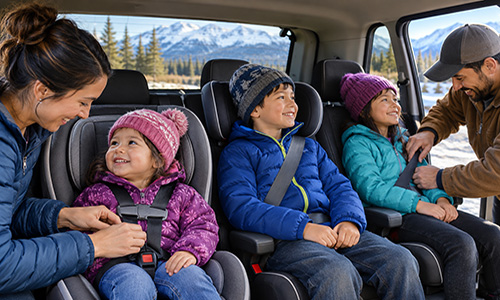
Image generated and modified using ChatGPT – Prompt: Alaskan parents ensuring their children ride in the car safely
Disclaimer: This article, Alaska Car Seat Safety, provides general information to help Alaska keep her children safer. However, it is not legal advice and does not create an attorney-client relationship. This information is not a substitute for professional medical advice, safety guidance, or legal advice. Safety recommendations and applicable laws may change. Parents and caregivers should consult qualified professionals and follow current safety guidelines and manufacturer instructions. Johnson Law, P.C. does not guarantee that following these recommendations will prevent accidents or injuries.