- Free Consultation: (907) 277-3090 Tap Here to Call Us








Alaska Kids Walking To School


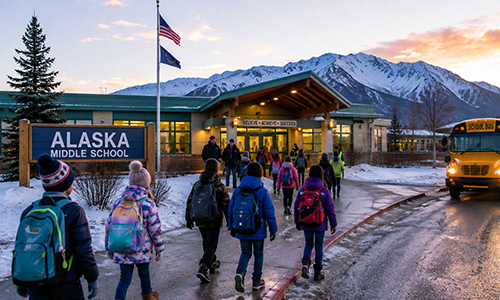
Alaska kids walking to school? Learn practical pedestrian, crosswalk, visibility, bicycle, and traffic safety tips for Alaska families during the 2026 to 2027 school year.
As Alaska students return for the 2026-27 school year, safety extends beyond the classroom. Our Alaska Back-to-School Safety Series covers the most important risks families and drivers should understand – from school buses, school zones, and increased traffic to children walking or biking to school and staying safe during after-school activities. Start with our Alaska Back-to-School Safety Tips, then learn more safety tips in this article for Alaska Kids Walking to School; followed by Alaska After School Safety; Alaska School Bus Stop Safety; and Alaska School Drop-Off Safety.
Alaska Kids Walking to School: Safety Tips
As the 2026-27 school year gets underway, more Alaska children will be walking and bicycling to school, waiting for buses, and traveling through neighborhoods during busy morning and afternoon hours.
Alaska’s roads can present unique challenges for young pedestrians. Changing daylight, weather, snow and ice, limited visibility, and drivers who may not expect children in the roadway can all increase the risk of a serious accident.
Parents can help by teaching children how to recognize traffic hazards and make safer choices when walking or biking to school.
How Can Alaska Kids Walking to School Stay Safe?
Children can stay safer by using sidewalks and crosswalks when available, obeying traffic signals, staying visible, and making sure approaching vehicles have stopped before crossing.
Parents should practice the route with younger children before the school year begins. Identify safe places to cross streets and point out intersections, driveways, parking lots, and other areas where vehicles may enter the child’s path.
Children should also understand that knowing the traffic rules does not guarantee that a driver will see them.
Teach Children to Stop, Look and Listen
Before crossing a street, children should:
- Stop at the edge of the roadway.
- Look left, right, and left again.
- Listen for approaching vehicles.
- Cross only when it is safe.
- Continue watching for vehicles while crossing.
Children should avoid distractions such as looking at a phone or wearing headphones that make it difficult to hear traffic.
Make Eye Contact With Drivers
When possible, children should make eye contact with drivers before crossing in front of a vehicle.
But eye contact is not a guarantee that a driver will stop. Children should wait until the vehicle has stopped and then check for other traffic before crossing.
Use Crosswalks Whenever Possible
Teach children to use designated crosswalks rather than crossing between parked vehicles or in the middle of a block.
A crosswalk can make a child easier for drivers to recognize, but children still need to look for approaching vehicles.
Parents should also explain that a driver turning through a crosswalk may not see a child immediately.
Before crossing, look for vehicles approaching from every direction – including vehicles turning onto the street.
Make Alaska Kids Walking to School Easier to See
Visibility becomes especially important as Alaska moves toward shorter days.
A child may be difficult for a driver to see when walking near a roadway in darkness, rain, snow, fog, or other low-visibility conditions.
Parents can improve visibility by choosing:
- Brightly colored jackets and outerwear
- Backpacks with reflective material
- Reflective strips or tape
- Reflective shoes or accessories
- Lights and reflectors for bicycles and scooters
Reflective gear does not replace safe behavior, but it can help drivers recognize a child sooner.
Walking Near Parking Lots and Driveways
Children can face significant risks even when they are not crossing a major roadway.
Parking lots and driveways can be particularly challenging because vehicles may move backward or forward with limited visibility.
Teach children to:
- Watch for vehicles entering and leaving driveways.
- Avoid walking directly behind vehicles.
- Stay alert in parking lots.
- Use sidewalks when available.
- Never assume a vehicle will stop.
- Give moving vehicles plenty of space.
Parents should be especially cautious when dropping children off at school. Children may move unpredictably as they get in or out of vehicles.
Alaska Kids and Bicycles
Bicycling can be a healthy and convenient way for older children to get to school, but children need to understand that bicycles share roads and paths with vehicles and pedestrians.
Before allowing a child to ride to school, parents should review the route and consider the child’s age, experience, traffic conditions, and ability to follow traffic rules.
Children riding bicycles should:
- Wear a properly fitted helmet.
- Follow traffic signs and signals.
- Ride predictably.
- Watch for vehicles at intersections.
- Use lights and reflectors when riding in low-light conditions.
- Avoid distractions.
- Watch carefully for vehicles turning across their path.
Parents should also check that bicycles have working brakes, tires, lights, and reflectors before the school year begins.
What Should Kids Do When a School Bus Arrives?
Children should stay away from the roadway while waiting for a school bus.
Teach children to:
- Wait in a safe location away from traffic.
- Avoid pushing or running toward the bus.
- Wait until the bus comes to a complete stop.
- Follow the driver’s instructions.
- Use handrails when getting on and off the bus.
- Stay alert around the bus.
- Never walk behind the bus.
If a child needs to cross the street after getting off the bus, teach them to follow the bus driver’s directions and carefully check for traffic.
Alaska’s Changing Daylight Matters
Back-to-school safety looks different in August than it does later in the school year.
As fall progresses, Alaska communities experience increasingly limited daylight. Depending on where a family lives, children may eventually travel to or from school in darkness or low-light conditions.
Parents should reconsider their child’s route and visibility as daylight changes.
A route that feels safe in August may require additional precautions later in the fall and winter.
Add reflective clothing, lights, and other visibility equipment as the days become shorter.
Create a Safe Route to School For Alaska Kids Walking to School
Parents can reduce risk by planning a consistent route with their children.
Look for:
- Sidewalks and separated pathways
- Marked crosswalks
- Traffic signals
- Crossing guards
- Areas with good visibility
- Roads with lower traffic volumes
- Safe locations to wait for a school bus
Avoid routes that require children to cross busy roads unnecessarily or walk along roads without safe pedestrian areas.
Practice the route together before school starts, and revisit it if weather, construction, or seasonal conditions change.
What Parents Should Remember
Children do not always recognize traffic hazards the way adults do. They may misjudge the speed or distance of an approaching vehicle, become distracted, or unexpectedly change direction.
Parents can help by practicing safe pedestrian habits throughout the school year—not just during the first week of school.
Talk with your children about:
- Crossing streets safely
- Watching for turning vehicles
- Staying visible
- Using crosswalks
- Bicycle and helmet safety
- School bus safety
- Parking lot safety
- Walking safely in low-light conditions
Most importantly, remind children that they must never assume a driver sees them.
A Safer School Year Starts With Awareness
As Alaska children return to school for the 2026-27 school year, parents, children, drivers, and schools all have a role in keeping students safe.
Take time to practice the safest route to school, check your child’s visibility, and talk about the traffic situations they are likely to encounter.
Slow down. Stay visible. Pay attention. And give Alaska’s children the time and space they need to get to school safely.
Disclaimer: This article series provides general educational information about Alaska School Safety for the 2026-27 School Year. However, it is not legal advice and does not create an attorney-client relationship. Because every case is unique, consult a qualified Alaska personal injury attorney about your specific circumstances.
Johnson Law, P.C. has been helping injured Alaskans and those injured while visiting Alaska for 30 years. It’s who we are. And while we hope you never need us… We’re here if you do. ~ Doug Johnson
Alaska School Information Source: Alaska Department of Education & Early Development
Image modified using ChatGPT – Prompt: Kids Arriving at an Alaska Middle School