- Free Consultation: (907) 277-3090 Tap Here to Call Us







Alaska School Bus Stop Safety


Alaska school bus stops can be busy and unpredictable places. Children may be walking near traffic, crossing roads, getting on or off buses, or waiting for a ride home. During Alaska’s 2026–27 school year, parents, children, and drivers should understand how to make school bus stops safer.
A few simple habits can reduce risks. Children should stay away from traffic, remain alert, and follow their bus driver’s instructions. Drivers should slow down near bus stops and be prepared for children to enter or cross the roadway.
How Can Children Stay Safer at an Alaska School Bus Stop?
Children should wait in a safe location away from traffic, stay alert, avoid playing near the roadway, and follow the school bus driver’s instructions.
Parents should teach children to:
- Arrive at the bus stop with enough time to wait safely.
- Stay away from the roadway while waiting.
- Avoid running, pushing, or playing near traffic.
- Keep backpacks and other belongings away from the roadway.
- Pay attention when the bus approaches.
- Wait for the bus to come to a complete stop before approaching it.
- Follow the driver’s instructions when boarding or leaving the bus.
- Stay alert around the bus and nearby traffic.
Stay Away From the Road
Children should have a designated place to wait that keeps them away from moving traffic.
A common safety recommendation is to remain several steps back from the roadway rather than standing at the edge of the road. The exact waiting area should follow the instructions of the child’s school district and bus operator.
A bus stop is not a place to run, play, chase another child, or retrieve an item that falls into the roadway.
What Should Children Do Before Boarding a School Bus?
Teach your children to wait until the bus has completely stopped and the driver indicates that it is safe to board.
Children should:
- Wait away from the roadway.
- Stay together and remain calm as the bus approaches.
- Wait for the bus to stop completely.
- Board using the handrails.
- Move promptly to a seat.
- Follow the driver’s instructions.
Children should never run toward a moving bus.
How Should Children Cross the Road to Board a School Bus?
Some Alaska children must cross a roadway to reach their bus.
Children should follow the crossing procedures taught by their school district and bus driver. They should never assume that traffic has stopped simply because the bus is stopped.
Before crossing, children should look carefully for approaching vehicles and follow the driver’s instructions.
If the child must cross in front of the bus, the child should remain where the driver can see them and should not enter the roadway until it is safe to do so.
Parents should practice the bus route and crossing procedure with younger children before the school year begins.
What Should Children Do After Getting Off the Bus?
Getting off the bus does not mean the danger has passed.
Children should:
- Use the handrails when exiting.
- Move away from the bus as directed by the driver.
- Stay alert for nearby traffic.
- Follow the driver’s instructions when crossing.
- Never walk behind the bus.
- Avoid running into the roadway.
Children should never assume that a vehicle approaching the bus can see them.
Alaska law specifically protects people crossing a roadway to board or leave a school bus. Drivers must yield to those people, whether or not they are crossing within a marked crosswalk.
Alaska School Bus Stop Safety for Drivers
Drivers have an important responsibility around school bus stops.
When approaching a school bus, slow down and prepare to stop. Watch for children near the roadway, especially during morning pickup and afternoon drop-off.
How Far Away Must Drivers Stop From a School Bus in Alaska?
Alaska law requires a driver approaching a stopped school bus with flashing red lights to stop at least 30 feet from the bus.
The driver must remain stopped until the bus proceeds and its flashing red lights are no longer illuminated.
Alaska DMV currently assigns six points for failing to stop for a school bus while it is loading or unloading.
Never try to pass a stopped school bus.
Watch for Children Near Alaska School Bus Stops
A school bus can block a driver’s view of children and the roadway.
Drivers should expect children to:
- Walk toward or away from the bus.
- Cross the roadway.
- Move unpredictably.
- Retrieve dropped belongings.
- Walk or bicycle near the bus stop.
Give children plenty of space and be prepared to stop.
Alaska also has a “SCHOOL BUS STOP AHEAD” warning sign. The Alaska Department of Transportation and Public Facilities lists this as an official school-related warning sign.
When you see the sign, slow down and watch carefully for a school bus and children.
Alaska Weather Adds Another Safety Challenge
Alaska’s weather can change quickly. Children waiting for a school bus may encounter rain, snow, ice, wind, cold temperatures, or rapidly changing visibility.
Parents should make sure children are prepared for the conditions they may encounter while waiting for and traveling to school.
Depending on the season and community, that may include:
- Warm layers
- Gloves
- Hats
- Waterproof footwear
- Reflective clothing or material
- Lights or other visibility equipment when appropriate
Visibility becomes increasingly important as Alaska’s daylight decreases later in the year.
Bright or reflective clothing can help make children easier for approaching drivers to see.
What If the Bus Is Late?
Children should know what to do if a school bus does not arrive on schedule.
Parents should establish a simple plan with their children:
- Continue waiting in the designated safe location.
- Do not leave the bus stop with someone the child does not know.
- Do not walk into traffic to look for the bus.
- Contact a parent, guardian, school, or other designated adult if instructed to do so.
- Follow the school’s procedures for transportation delays.
Children should also understand that a delayed bus is not a reason to move closer to the roadway.
Alaska School Bus Safety Is a Community Responsibility
Keeping children safe at Alaska school bus stops requires cooperation from everyone.
Parents can teach children how to wait, board, exit, and cross safely.
Bus drivers can provide children with clear instructions and monitor their surroundings.
Drivers can slow down, watch for children, and obey Alaska’s school-bus laws.
Schools and communities can help identify and address hazards around bus stops.
Alaska School Bus Alert Pilot Project
Alaska has also explored technology to improve school-bus awareness. The Alaska Department of Transportation and Public Facilities has operated a school-bus audio-alert pilot in the Fairbanks North Star Borough through the 511 Alaska app, providing drivers with alerts when they approach participating school buses.
Protect The Alaska 2026–27 School Year With Safe Habits
A safe school year begins before a child boards the bus. If your child walks to or from the bus stop, see our guide to Alaska Child Pedestrian Safety: Fall and Winter Tips for more ways to prepare for darker mornings and winter walking conditions.
Parents can walk through the bus-stop routine with their children, identify where they should wait, discuss what to do when the bus arrives, and practice any necessary roadway crossing.
As the school year progresses, remember that Alaska’s weather, daylight, and road conditions will change. Slow down, stay alert, and give Alaska’s children the time and space they need to get on and off the school bus safely.
As Alaska students return for the 2026-27 school year, safety extends beyond the classroom. Our Alaska Back-to-School Safety Series covers the most important risks families and drivers should understand – from school buses, school zones, and increased traffic to children walking or biking to school and staying safe during after-school activities. Start with our Alaska Back-to-School Safety Tips, then learn more safety tips for Alaska Kids Walking to School; Alaska After School Safety; this article: Alaska School Bus Stop Safety; and Alaska School Drop-Off Safety.
Disclaimer: This article series provides general educational information about Alaska School Safety for the 2026-27 School Year. However, it is not legal advice and does not create an attorney-client relationship. Because every case is unique, consult a qualified Alaska personal injury attorney about your specific circumstances.
Johnson Law, P.C. has been helping injured Alaskans and those injured while visiting Alaska for 30 years. It’s who we are. And while we hope you never need us… We’re here if you do. ~ Doug Johnson
Alaska School Information Source: Alaska Department of Education & Early Development
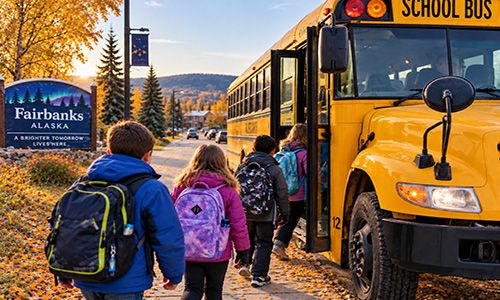
Image generated and modified using ChatGPT – Prompt: Children being picked up for school in Fairbanks, Alaska