- Free Consultation: (907) 277-3090 Tap Here to Call Us







Keeping Alaska Kids Safe


Keeping Alaska Kids Safe: Alaska Winter Car Seat Safety: Learn how Alaska parents can keep children warm and secure in vehicles during winter with safe clothing, proper harness fit, and cold-weather travel preparation.
Keeping Alaska Kids Safe In Cold Weather
Alaska winters bring freezing temperatures, snow, ice, and limited daylight. For families, even a short drive can require extra preparation. Keeping children warm is important. However, winter clothing can also interfere with car seat safety if it prevents a harness from fitting correctly.
Keeping Alaska Kids Safe: Alaska Winter Car Seat Safety
Alaska winter car seat safety means keeping children warm without compromising their protection during a crash. Bulky coats, snowsuits, and thick padding can create dangerous gaps beneath car seat harnesses. Fortunately, parents can take simple precautions to protect children during cold-weather travel.
Why Winter Clothing Can Be Dangerous in a Car Seat
Heavy winter coats and snowsuits may look harmless when a child is buckled in. However, bulky padding can create a hidden safety problem. Alaska winter car seat safety begins with keeping children warm without compromising proper harness fit.
When a harness fits over a thick coat, the straps may appear snug. During a collision, the coat’s padding compresses rapidly, creating extra space between the harness and the child’s body.
As a result, the harness may no longer hold the child securely. Excess slack can increase the risk of serious injury.
Therefore, remove bulky outerwear before securing children in their car seats. The harness should fit snugly against the child’s body without thick padding underneath.
Keeping Alaska Kids Warm Without Compromising Safety
Alaska’s cold temperatures make dressing children for vehicle travel challenging. Fortunately, parents do not have to choose between warmth and safety.
Dress Children in Warm, Thin Layers
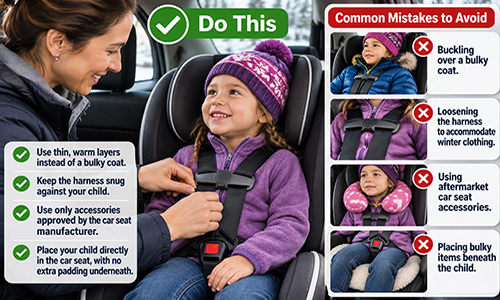
Instead of bulky coats, keep Alaska kids safe in thin layers that fit comfortably under the harness. Thermal shirts, lightweight sweaters, and thin fleece can help keep children warm without interfering with restraint fit.
Before buckling a child into a car seat:
- Remove bulky coats and snowsuits.
- Check that clothing does not bunch beneath the harness.
- Tighten the harness against the child’s body.
- Ensure the straps lie flat and are not twisted.
Once the harness is secure, add warmth from the outside.
Place Blankets or Coats Over the Harness
After securing a child properly, place a blanket over the harness for warmth. You can also put the child’s coat on backward over the secured straps.
This approach helps retain warmth without adding bulky padding between the child and the harness, keeping Alaska kids safe.
However, keep blankets and outer layers away from the child’s face. Remove extra coverings if the vehicle becomes warm to prevent overheating.
Use Hats, Mittens, and Warm Socks
Hats, mittens, and warm socks help protect children from cold temperatures without interfering with harness fit.
Keep extra dry mittens and socks available. Children often lose them or get them wet while playing outside. Wet clothing can make them uncomfortable and increase the risk of cold exposure.
Should Parents Warm the Vehicle Before Driving?
Alaska Winter Car Seat Safety also includes preparing your vehicle before traveling in freezing temperatures. Prewarming a vehicle can make winter travel more comfortable, especially when temperatures drop well below freezing. However, warming a vehicle requires careful attention to safety.
If you warm the vehicle before loading children, make sure it is outdoors in a well-ventilated area. Never run a vehicle in an enclosed garage, even with the garage door open. Carbon monoxide can accumulate and cause serious poisoning.
Additionally, never leave children unattended in a running or parked vehicle. Children can be exposed to dangerous temperatures, accidental vehicle movement, or other hazards.
Whenever possible, prepare the vehicle before bringing children outside. Clear snow and ice from windows, mirrors, lights, and the vehicle’s roof. This allows you to load children and begin your trip without unnecessary exposure to the cold.
Keeping Alaska Kids Safe When Preparing for Winter Travel
Alaska weather can change quickly. Even routine trips may become difficult when snow, ice, poor visibility, or extreme temperatures affect road conditions.
Before traveling with children, take a few minutes to prepare.
Check Weather and Road Conditions
Before leaving, check the weather forecast and road conditions. Consider delaying your trip if conditions become dangerous or visibility is poor.
Give yourself additional travel time. Driving more slowly and leaving extra space between vehicles can reduce risks on slippery roads.
Keep Winter Emergency Supplies in Your Vehicle
Alaska Winter Car Seat Safety also involves preparing for unexpected delays, breakdowns, or emergencies in cold weather. Families traveling during Alaska winters should carry emergency supplies in case they become stranded or experience an unexpected delay.
Consider keeping the following items in your vehicle:
- Warm blankets or sleeping bags
- Extra hats, mittens, socks, and dry clothing
- Water and nonperishable snacks
- Flashlight and extra batteries
- Phone charger or portable power bank
- First-aid kit
- Snow shovel and traction aids
- Emergency reflectors or warning devices
- Essential medications
For families with infants and young children, additional supplies may be necessary. Include diapers, wipes, feeding supplies, and any items your child needs for comfort or medical care.
Plan for Delays
Winter travel can take longer than expected. Road closures, accidents, weather conditions, and mechanical problems may leave families waiting in their vehicles.
Keep enough fuel in the tank and avoid unnecessary travel during severe weather. If conditions deteriorate, stop somewhere safe rather than continuing through hazardous roads.
For longer trips, tell someone your route and estimated arrival time. This is especially important when traveling through remote areas of Alaska with limited services or cell coverage.
Protecting Children From Cold Exposure
Young children are particularly vulnerable to cold temperatures. They may not recognize the warning signs of cold exposure or communicate discomfort clearly.
Parents and caregivers should watch for signs that a child is becoming too cold, including:
- Persistent shivering
- Pale or unusually cold skin
- Unusual tiredness or sluggishness
- Irritability or changes in behavior
- Numbness or complaints of pain in fingers, toes, ears, or cheeks
If a child shows signs of cold exposure, move them to a warm environment and remove wet clothing. Seek medical attention if symptoms are severe, persistent, or concerning.
Never leave a child outside or in an unattended vehicle while running errands, even for a brief period.
Common Winter Car Seat Safety Mistakes
Parents and caregivers may unknowingly compromise child passenger safety while trying to keep children warm.
Avoid these common mistakes:
- Buckling over a bulky coat: Thick padding can compress during a crash and create harness slack.
- Loosening the harness to accommodate winter clothing: The harness should fit snugly against the child’s body.
- Using aftermarket car seat accessories: Products that were not approved by the car seat manufacturer may interfere with the seat’s performance.
- Placing bulky items beneath the child: Thick padding or inserts may affect the restraint’s fit and crash protection.
- Leaving children unattended in vehicles: Never leave children alone in or around vehicles.
- Ignoring winter road conditions: Poor visibility, ice, and snow increase driving risks and can turn a routine trip into a dangerous one.
Parents should follow their car seat manufacturer’s instructions before using covers, inserts, or other accessories. Not every product marketed for winter car seat use is safe.
Frequently Asked Questions About Alaska Winter Car Seat Safety
Can my child wear a winter coat in a car seat?
Bulky winter coats and snowsuits should not be worn beneath car seat harnesses. Their padding can compress during a crash, creating extra space between the harness and the child. Use thin layers instead, and place a blanket or coat over the secured harness.
How can I keep my child warm on extremely cold Alaska mornings?
Dress your child in warm, thin layers. Secure the harness snugly against the child’s body, then add a blanket or coat over the harness. Hats, mittens, and warm socks can provide additional protection.
Are car seat covers safe in winter?
Only use covers or accessories approved by the manufacturer of your specific car seat. Products that add padding beneath a child or behind the harness may interfere with restraint performance. Avoid accessories that did not come with the seat unless the manufacturer approves their use.
Is it safe to warm my vehicle before putting my child inside?
Vehicle prewarming can make travel more comfortable, but never run a vehicle inside an enclosed garage. Ensure the vehicle is outdoors and well ventilated. Never leave children unattended in a vehicle while it warms up.
What should I keep in my vehicle for winter emergencies with children?
Carry warm blankets, extra dry clothing, hats, mittens, snacks, water, a flashlight, a phone charger, first-aid supplies, and other necessities. Families traveling long distances or through remote areas should prepare for extended delays.
Keeping Alaska Kids Safe During Winter Travel
Winter in Alaska requires extra care, especially when children travel in vehicles. Parents and caregivers can help protect young passengers by choosing appropriate clothing, securing harnesses correctly, preparing for winter conditions, and avoiding unnecessary risks.
Alaska winter car seat safety is about balancing warmth with proper protection. A few extra minutes spent checking harness fit and preparing for the trip can make a meaningful difference.
At Johnson Law, P.C., we know that serious motor vehicle accidents can have lasting consequences for children and their families. We have served injured Alaskans for more than 30 years and help families understand their legal options following serious accidents.
Related Child Safety Articles
- National Child Safety and Protection Month: Keeping Alaska’s Children Safe — Learn why child safety awareness and injury prevention matter to Alaska families and communities.
- Alaska Child Safety: Preventing Accidents at Home, School, and Outdoors — Explore practical ways to reduce everyday hazards where children live, learn, and play.
- Alaska Child Road Safety — Learn how families and communities can help protect young pedestrians and cyclists.
Johnson Law has been helping Alaskans for nearly 30 years. It’s who we are. Johnson Law is here to help you understand your legal options. Please call us at (907)277-3090 or use our online contact form.
And while we hope you never need us… We’re here if you do. ~ Doug Johnson
Information Source: NHTSA: Keep Your Little Ones Warm and Safe in Their Car Seats; NHTSA: Winter Weather Driving Tips; and Safe Alaskans: Car Seat and Booster Seat Safety
Image generated and modified using ChatGPT – Prompt: Avoid Common Mistakes When Traveling With Children
Disclaimer: This article, Keeping Alaska Kids Safe, provides general information to help Alaska keep her children safer. However, it is not legal advice and does not create an attorney-client relationship. This information is not a substitute for professional medical advice, safety guidance, or legal advice. Safety recommendations and applicable laws may change. Parents and caregivers should consult qualified professionals and follow current safety guidelines and manufacturer instructions. Johnson Law, P.C. does not guarantee that following these recommendations will prevent accidents or injuries.