- Free Consultation: (907) 277-3090 Tap Here to Call Us








Alaska Pedestrian Night Safety


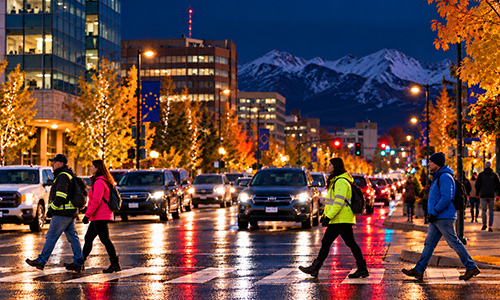
Alaska pedestrian night safety – learn more tips for walking after dark, wearing reflective gear, choosing safer routes, and avoiding accidents after dark.
Alaska Pedestrian Safety at Night: Stay Visible
Walking after dark can be more dangerous as Alaska moves into fall and winter. Shorter daylight hours mean more people walk to work, school, bus stops, and local destinations in darkness. Rain, fog, frost, and snow can make pedestrians even harder for drivers to see.
From Anchorage and the Mat-Su Valley to Fairbanks and rural Alaska, pedestrians should take extra precautions when walking near traffic after sunset. Wearing reflective gear, carrying a flashlight, choosing safer routes, and crossing roads carefully can help reduce the risk of a serious accident.
How Can Pedestrians Stay Safe Walking at Night in Alaska?
Pedestrians can improve their safety at night by wearing reflective clothing, carrying a flashlight, using sidewalks and designated crossings, and staying alert to approaching traffic. They should never assume a driver has seen them or will stop.
Follow these practical precautions when walking after dark:
- Wear bright or reflective clothing that helps drivers see you.
- Carry a flashlight or use a headlamp to illuminate your path.
- Use sidewalks and separated walking paths whenever available.
- Cross at intersections and designated crosswalks when possible.
- Watch for turning vehicles and drivers approaching from side streets.
- Avoid distractions from phones and headphones near traffic.
- Walk facing oncoming traffic when using a road without a sidewalk, where appropriate and consistent with applicable law.
- Take extra care on wet, icy, or snow-covered surfaces.
These steps are especially important during Alaska’s fall and winter months, when darkness can coincide with poor weather and slippery walking conditions.
Why Is Walking at Night More Dangerous in Alaska?
Darkness reduces the distance at which drivers can recognize pedestrians. A person wearing dark clothing may blend into the background, particularly on roads without streetlights.
Several conditions can increase the risk of a nighttime Alaska pedestrian accident.
Shorter Days and Longer Periods of Darkness
During fall and winter, many Alaskans travel on foot before sunrise or after sunset. Drivers may have less time to recognize a pedestrian and react, particularly near intersections, driveways, and roadside walking areas.
Alaska pedestrians should plan their routes with visibility in mind and avoid assuming that a familiar road will be easy to navigate in darkness.
Rain, Fog, Frost, and Snow
Weather can make nighttime walking more hazardous. Rain and fog can reduce visibility, while frost and ice can make sidewalks, driveways, and road shoulders slippery.
Snowbanks may also narrow walking areas or obstruct sightlines near intersections and driveways. When possible, choose cleared paths and avoid walking close to moving traffic.
For more advice on preparing for changing conditions, read our related article, Autumn Vehicle Care: Prepare Your Car for an Alaska Winter.
Limited Street Lighting
Some residential streets, rural roads, and walking routes have little artificial lighting. Drivers may have difficulty seeing pedestrians until they are close.
Choose well-lit routes when practical. If you must walk along a dark road, make yourself visible from multiple directions and remain alert to approaching vehicles.
Headlight Glare
Headlights from oncoming vehicles can temporarily make it harder for drivers to distinguish pedestrians and other hazards. Wet pavement can reflect light and further complicate visibility.
Do not assume a driver can see you clearly just because the vehicle’s headlights are on. Wait until you can safely cross and give approaching traffic enough time to respond.
Limited Street Lighting
Some residential streets, rural roads, and walking routes have little artificial lighting. Drivers may have difficulty seeing pedestrians until they are close.
Choose well-lit routes when practical. If you must walk along a dark road, make yourself visible from multiple directions and remain alert to approaching vehicles.
Headlight Glare
Headlights from oncoming vehicles can temporarily make it harder for drivers to distinguish pedestrians and other hazards. Wet pavement can reflect light and further complicate visibility.
Do not assume a driver can see you clearly just because the vehicle’s headlights are on. Pedestrian night safety includes waiting until you can safely cross and give approaching traffic enough time to respond.
What Should Alaska Pedestrians Wear to Be Seen at Night?
Reflective clothing and accessories can help drivers recognize pedestrians in low light. Bright colors may improve visibility during daylight and twilight, while reflective materials are particularly useful when illuminated by vehicle headlights.
Consider these options:
- Reflective vests or jackets: These make a pedestrian more noticeable from a distance.
- Reflective bands: Wear reflective bands around your arms, wrists, or ankles to make movement easier to recognize.
- Reflective backpacks: These can improve visibility when walking to work, school, or a bus stop.
- Bright outerwear: Yellow, orange, and other bright colors may help during daylight and twilight.
- Reflective footwear or accessories: These provide additional visibility when drivers’ headlights reach them.
For the best visibility, use reflective materials on more than one part of your body. This can help drivers recognize you from different angles.
Dark clothing does not automatically make walking unsafe, but it can make Alaska pedestrians harder to see at night. Do not rely on bright clothing alone when walking in darkness.
Should You Carry a Flashlight When Walking After Dark?
Yes. A flashlight or headlamp can help you see obstacles and make yourself more noticeable to drivers increasing pedestrian night safety.
A flashlight can illuminate uneven pavement, ice, snowbanks, and other hazards along your route. A headlamp can keep your hands free, which may be helpful when walking on slippery paths.
Keep these precautions in mind:
- Point your light toward the ground or your walking path rather than directly into drivers’ eyes.
- Carry a flashlight with sufficient battery power for your trip.
- Use reflective gear in addition to a light.
- Keep your light accessible rather than buried in a backpack.
- Remain alert to traffic even when your path is illuminated.
A flashlight is particularly useful on rural roads and unlit walking paths, but it does not replace safe route selection or careful crossing practices.
Where Is It Safest to Walk After Dark?
Whenever possible, choose routes that separate Alaska pedestrians from moving vehicles.
Use Sidewalks and Walking Paths
Sidewalks and separated walking paths provide space away from traffic. Use them whenever they are available and reasonably safe.
Watch for icy patches, snow-covered obstacles, uneven pavement, and areas where snowbanks force pedestrians closer to the roadway.
Cross at Intersections and Designated Crosswalks
Choose intersections and marked crosswalks when possible. Follow pedestrian signals, both day and night, and always check traffic in every direction before crossing to increase safety.
Do not assume a vehicle will stop just because you are in a crosswalk. Make sure approaching drivers have seen you and that it is safe to proceed.
Avoid stepping into the road from behind parked vehicles, snowbanks, or other obstructions that may prevent drivers from seeing you.
Be Careful Near Driveways and Parking Lots
Drivers may back out of driveways or parking spaces without seeing someone walking behind their vehicle.
Watch for reversing lights, listen for vehicles, and give drivers enough space to maneuver. Do not walk directly behind a vehicle that is backing up.
Take Extra Care on Rural Roads
Rural Alaska roads may have narrow or nonexistent shoulders, limited lighting, and vehicles traveling at higher speeds.
If you must walk along a road without a sidewalk, walk facing oncoming traffic where appropriate, keep as far from moving vehicles as practical, and use reflective gear and a light.
If traffic is heavy or the shoulder is unsafe, consider another route or transportation option.
How Can Parents Keep Children Safe Walking After Dark?
Children may be difficult for drivers to see, especially when they are smaller, wearing dark clothing, or walking near parked vehicles.
Parents and caregivers can help children develop safer pedestrian safety habits, for both day and night by teaching them to:
- Wear reflective clothing or accessories during darker hours.
- Use sidewalks and designated crossings whenever possible.
- Stop and check for traffic before crossing.
- Avoid running into the roadway or crossing from between parked vehicles.
- Put away phones and other distractions when crossing streets.
- Stay alert near driveways, intersections, and bus stops.
- Walk with a responsible adult when appropriate for their age and surroundings.
Drivers should also slow down near schools, residential neighborhoods, and bus stops, particularly during morning and evening hours.
For more child-specific advice, see our related articles, Alaska Kids Walking to School: Safety Tips and Alaska School Bus Stop Safety.
What Should You Do if a Driver Does Not See You?
If a vehicle approaches and you are unsure whether the driver has seen you, do not step into its path.
Wait in a safe location until the vehicle has passed or stopped. When crossing, make eye contact when possible, but do not treat eye contact as proof that the driver will yield.
If a vehicle turns toward you or begins backing into your path, move away from the vehicle’s path if you can do so safely. Avoid sudden movements into another traffic lane.
Alaska pedestrian safety is more important than insisting on right of way in a situation where a collision may occur. Once traffic has cleared, cross only when it is safe and lawful to do so.
What Should You Do After a Pedestrian Accident in Alaska?
A pedestrian accident can cause serious injuries, even when the vehicle is traveling at a relatively low speed. If you are involved in a collision, prioritize safety and medical care.
1. Call 911 when necessary. Request emergency assistance if someone is injured or the scene presents an immediate danger.
2. Get to a safe location if possible. Avoid standing in active traffic. Do not move an injured person unless an immediate danger requires it, and follow emergency responders’ instructions.
3. Seek medical attention. Injuries may not be immediately apparent. Get an appropriate medical evaluation after a collision, particularly if you experience pain, dizziness, confusion, or other concerning symptoms.
4. Obtain information. When safe, collect the driver’s contact and insurance information and identify witnesses.
5. Document the scene. If safe to do so, photograph the location, roadway, crosswalk, lighting conditions, and relevant vehicle damage.
6. Preserve records. Keep medical records, receipts, photographs, and communications related to the accident.
7. Notify the appropriate insurer. Report the collision as required and provide accurate information.
If you have questions about fault, insurance coverage, or an injury claim, consider speaking with an Alaska personal injury attorney.
Who May Be Responsible for a Pedestrian Accident in Alaska?
Responsibility for a pedestrian accident depends on the circumstances, including the actions of the driver and pedestrian, visibility, road conditions, and applicable law.
A driver may face liability if negligent conduct, such as failing to yield when required, driving too fast for conditions, or failing to watch for pedestrians, contributes to an injury. A pedestrian’s actions may also be relevant when determining responsibility.
Alaska follows comparative-fault principles, which can affect the amount of damages a person may recover. The specific application depends on the facts and applicable law.
Darkness alone does not establish fault, and a pedestrian accident does not automatically create a valid personal injury claim. Evidence and the circumstances of the collision must be evaluated.
If you or a family member has been injured, an Alaska personal injury attorney can explain potential legal options, relevant insurance coverage, and the claims process.
Alaska Pedestrian Safety at Night: Make Visibility a Priority
As Alaska’s days grow shorter, pedestrians should take extra precautions when walking near traffic. Reflective clothing, flashlights, safer routes, and careful crossing practices can help drivers recognize pedestrians and reduce the risk of a collision.
Drivers also have an important role in preventing nighttime pedestrian accidents. Slowing down, watching crosswalks, using headlights properly, and eliminating distractions can help protect everyone who shares the road.
For additional advice on preventing collisions as daylight decreases, read our related article, Alaska Fall Driving Safety: How to See Pedestrians in Low Light.
Johnson Law, P.C. represents Alaska pedestrians injured in motor vehicle accidents throughout Alaska. We investigate serious crashes and help injured Alaskans understand their legal rights and options. If you are injured in a crash, it is important that you hold the negligent person responsible. Please call Johnson Law to discuss your claims: (907)277-3090 or use our online contact form.
Johnson Law has been helping Alaskans for nearly 30 years. It’s who we are. And while we hope you never need us… We’re here if you do. ~ Doug Johnson
Disclaimer: This article series provides general educational information about preparing your vehicle for a safer fall and winter in Alaska. However, it is not legal advice and does not create an attorney-client relationship. Because every case is unique, consult a qualified Alaska personal injury attorney about your specific circumstances.
Image generated and modified using ChatGPT – Prompt: Anchorage citizens safely crossing busy traffic areas of Anchorage on a fall evening