- Free Consultation: (907) 277-3090 Tap Here to Call Us








Alaska Roads Without Sidewalks


Walking Along Alaska Roads Without Sidewalks: How to Stay Safe
In many Alaska communities, getting from one place to another means walking beside a road without a sidewalk. Rural highways, residential streets, and roads on the outskirts of town may have narrow shoulders, limited lighting, or no designated pedestrian path. In winter, snowbanks and icy conditions can make these routes even more difficult to navigate.
Walking near moving traffic can be dangerous, especially when drivers have limited time or space to react. However, choosing a safer route, walking in the correct position, improving your visibility, and planning for road and weather conditions can help reduce your risk.
Whether you are walking in Anchorage, Fairbanks, the Mat-Su Valley, or a smaller Alaska community, these tips can help you make safer decisions when sidewalks are unavailable.
How Should You Walk on an Alaska Road Without a Sidewalk?
When a sidewalk is unavailable, Alaska safety guidance recommends walking on the shoulder, as far from moving traffic as practical. If there is no shoulder, walk as close as practical to the outside edge of the road. On a two-way road, walk on the left side so you face approaching traffic. Avoid controlled-access highways, where pedestrians are prohibited except in emergencies.
Whenever possible, choose a route with a sidewalk, separated path, or wide, usable shoulder instead of walking beside fast-moving traffic.
1. Choose the Safest Route Before You Leave
The shortest route is not always the safest. Before setting out, consider the amount of traffic, road speed, shoulder width, lighting, and visibility along the route. Especially sections of Alaska roads without sidewalks.
Look for alternatives that offer:
- Sidewalks or separated walking paths.
- Wide shoulders that provide distance from moving vehicles.
- Good lighting and clear views of approaching traffic.
- Safe places to cross roads and intersections.
- Fewer blind curves, steep hills, and narrow bridges.
A route that feels manageable during daylight may become hazardous after dark or during bad weather. Check conditions before leaving, and consider arranging a ride if the only available route exposes you to fast traffic with little room to walk safely.
In some Alaska communities, roads were designed primarily for vehicle travel. If you regularly need to walk along a road without a sidewalk, consider reporting blocked or unsafe pedestrian access to the appropriate local or state transportation agency.
2. Walk Facing Approaching Traffic
When no sidewalk is available, walking in a position where you can see approaching vehicles gives you more opportunity to recognize a developing hazard.
Under Alaska’s pedestrian rules, if neither a sidewalk nor a shoulder is available, pedestrians walking along a two-way road must walk near the outside edge and on the left side of the road, facing approaching traffic. Where a shoulder is available, pedestrians should use it as far from the roadway as practical.
Stay alert as vehicles approach. If a driver appears not to see you, or a vehicle is moving toward the shoulder, be prepared to move farther away from traffic if a safe place is available.
Do not assume that seeing a vehicle means the driver has seen you. Drivers may be distracted, looking for other vehicles, or dealing with poor visibility and slippery road conditions.
3. Stay as Far From Moving Vehicles as Practical
A narrow shoulder can leave little room between pedestrians and traffic on Alaska roads without sidewalks. Large trucks, buses, and other wide vehicles may pass close to the edge of the road. Even when a vehicle does not strike you, its speed and proximity can make walking uncomfortable and dangerous.
Keep as much distance from moving traffic as the available space safely allows. Avoid walking side by side if doing so pushes someone closer to the roadway. When walking with children, keep them under close supervision and away from the traffic side whenever practical.
Never step into a traffic lane simply to get around an obstacle without first assessing the danger. If a parked vehicle, snowbank, roadwork, or other obstruction blocks your path, look for a safe alternative. If there is no safe way to continue, turn back or arrange another form of transportation.
4. Make Yourself Visible to Drivers
Drivers need enough time to recognize a pedestrian and respond. Visibility becomes especially important during Alaska’s short winter days, twilight, snowfall, fog, and blowing snow.
Help drivers see you on Alaska roads without sidewalks by:
- Wearing bright or contrasting outerwear during the day.
- Using reflective material on your jacket, pants, backpack, or footwear.
- Carrying a flashlight or wearing a headlamp when walking in low light.
- Choosing a route with streetlights or other consistent lighting when possible.
- Avoiding sudden movements into the path of approaching vehicles.
Reflective gear works when light reaches it, so do not rely on it as a substitute for a safe route. A flashlight can help you see uneven surfaces and may make you more noticeable, but it cannot guarantee that a driver will see you.
For more guidance, read our article Alaska Pedestrian Safety at Night: Stay Visible.
5. Be Extra Careful on Curves, Hills, and Narrow Bridges
Road features that limit a driver’s view can also limit your ability to see approaching vehicles on Alaska roads without sidewalks. Curves, hillcrests, narrow bridges, and areas with dense vegetation may leave little warning before traffic reaches you.
Avoid walking in places where drivers cannot see you in time to respond. When possible, plan a route that avoids blind curves and narrow bridges, even if it takes longer.
If you must approach a difficult section, stop in a safe place away from traffic and assess whether you can proceed without entering the path of vehicles. Do not assume drivers will be able to move over, particularly when oncoming traffic is present.
If a road has no safe walking space, the safest choice may be not to continue on foot.
6. Adjust for Snow, Ice, and Snowbanks
Alaska’s winter conditions can turn an already narrow walking area into a dangerous route. Snow and ice may reduce traction, while plowed snow can block shoulders and force pedestrians closer to traffic.
Before walking, consider whether you can use a cleared path or another route. Wear footwear with good traction and take shorter, deliberate steps on slippery surfaces. Avoid sudden turns or rushing across icy areas.
Snowbanks can also obstruct sightlines, making it difficult for pedestrians and drivers to see one another. Especially on Alaska roads without sidewalks. Be extremely cautious near driveways and intersections, where vehicles may emerge from behind piled snow.
If snow or ice has eliminated the available walking space, do not assume it is safe to walk in the traffic lane. Consider turning back, waiting for conditions to improve, or finding another way to reach your destination.
For more tips, read Alaska Winter Walking Safety: Avoid Slips, Falls, and Traffic Hazards.
7. Cross Roads Where You Can See and Be Seen
Crossing an Alaska road without sidewalks can be especially challenging when traffic moves quickly or sightlines are limited. Whenever possible, use a designated crossing or intersection and follow pedestrian signals.
Before crossing:
- Stop where you have a clear view of traffic in both directions.
- Check for vehicles approaching from all directions, including those turning.
- Make sure approaching drivers have seen you and have stopped or left enough safe space.
- Avoid stepping out from behind parked vehicles, vegetation, or snowbanks.
- Continue watching traffic as you cross.
Do not assume a driver can stop quickly on wet, snowy, or icy pavement. If you cannot find a safe place to cross, continue to a more suitable location rather than taking a risk.
8. Take Extra Precautions When Walking With Children On Alaska Roads Without Sidewalks
Children may have difficulty judging vehicle speed and distance, and drivers may have trouble seeing smaller pedestrians. These risks increase when children wear bulky winter clothing or walk along narrow roads.
Choose routes with the least exposure to traffic, supervise younger children closely, and teach them to stop before approaching the roadway. Make sure they understand why they should never dart out from behind vehicles or snowbanks.
If there is no safe pedestrian space, consider arranging a ride or choosing a different route. Children should not have to walk along a dangerous road simply because it is the most direct way to reach school or another destination.
For more family-focused guidance, see Alaska Kids Walking to School: Safety Tips.
9. Know When Walking Is Too Dangerous
Even careful pedestrians cannot control traffic, weather, or the design of the road. Some routes simply do not provide enough space or visibility for a person to walk safely. This is an even greater concern along Alaska roads without sidewalks.
Consider avoiding a route when:
- Vehicles travel at high speeds and the shoulder is narrow or nonexistent.
- A curve or hill blocks the view of approaching traffic.
- Snowbanks, ice, or roadwork leave no safe walking area.
- Darkness or severe weather makes it difficult for drivers to see you.
- You would need to walk in an active traffic lane.
When possible, choose another route, arrange a ride, or wait for safer conditions. Taking extra time is preferable to entering a situation where you have little room to avoid a vehicle.
What If a Vehicle Hits a Pedestrian?
If a vehicle strikes you while you are walking, seek medical attention as soon as possible. Call 911 if you have a serious injury, need emergency assistance, or are in immediate danger.
If you can do so safely, move away from traffic and ask someone to call for help. Follow medical advice, document the incident when practical, and obtain the driver’s and witnesses’ contact information. Do not put yourself at risk to collect evidence.
If you are injured in a pedestrian collision, questions about responsibility and insurance may depend on the circumstances. Alaska law may consider the conduct of everyone involved, and legal deadlines can apply. An injury does not automatically establish that another party is legally responsible.
Read our guide, Alaska Pedestrian Accidents: What to Do After an Injury, for more information about medical care, evidence, insurance, and potential legal options.
Safer Walking in Alaska Starts With Planning
Walking along an Alaskan road without a sidewalk requires extra care. Choose the safest available route, walk facing approaching traffic when required, stay as far from vehicles as practical, and make yourself visible. Be especially cautious around curves, intersections, snowbanks, and narrow shoulders.
If the road offers no safe place to walk, do not assume that extra caution alone will make it safe. Consider another route or another way to travel.
Alaska pedestrians deserve safe ways to reach work, school, stores, and community services. Until a safer route is available, thoughtful planning and awareness can help reduce some of the risks of walking near traffic.
If you or a family member has been injured in a pedestrian accident caused by another person’s negligence, consider contacting Johnson Law to discuss your questions and potential options. Please call Johnson Law to discuss your claims: (907)277-3090 or use our online contact form.
Johnson Law has been helping Alaskans for nearly 30 years. It’s who we are. And while we hope you never need us… We’re here if you do. ~ Doug Johnson
Disclaimer: This article series provides general educational information about preparing your vehicle for a safer fall and winter in Alaska. However, it is not legal advice and does not create an attorney-client relationship. Because every case is unique, consult a qualified Alaska personal injury attorney about your specific circumstances.
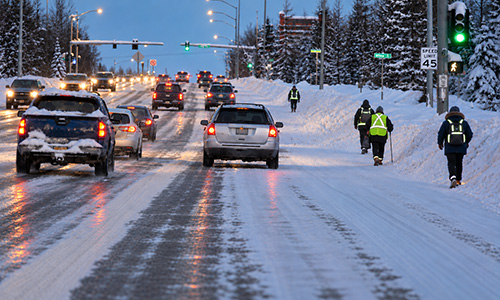
Image generated and modified using ChatGPT – Prompt: Anchorage citizens walking Tudor Road after a heavy snowfall and snow plowing