- Free Consultation: (907) 277-3090 Tap Here to Call Us






Alaska Survival Claims


Alaska Survival Claims: Key Legal Terms
Alaska Survival Claims: Learn how personal injury claims continue after death, who can pursue them, estate rights, damages, and filing deadlines.
Quick Answer
Survival Claim or Survival Action: Under Alaska Statute 09.55.570, a “survival action” or “survival claim” allows a deceased person’s estate to pursue personal injury claims (like pre-death pain and suffering or medical bills) that the victim could have brought had they lived.
An Alaska survival claim allows certain legal claims that belonged to a person before death to continue through the person’s estate after death. Unlike a wrongful death claim, which seeks compensation for losses resulting from the death, a survival claim preserves the deceased person’s own cause of action.
Alaska law provides that, with limited exceptions, causes of action survive the death of a party and pass to the person’s personal representative. (AS 09.55.570)
Understanding terms such as survival action, personal representative, estate, decedent, cause of action, pre-death damages, and wrongful death claim can help families understand what happens to a personal injury claim when an injured person dies.
What Is a Survival Claim in Alaska?
A survival claim is a legal claim that continues after the person who held the claim dies.
For example, suppose a person suffers serious injuries because of another party’s negligence and later dies. If the person’s personal injury claim had not ended before death, Alaska law generally allows that claim to survive through the person’s personal representative, subject to applicable exceptions and other legal requirements. (AS 09.55.570)
The survival claim focuses on the deceased person’s own legal claim. That makes it different from a wrongful death claim, which addresses losses caused by the person’s death.
What Is a Survival Action?
An Alaska survival action is the legal proceeding used to pursue a claim that survives the death of the person who originally held it.
Alaska Statute 09.55.570 provides that causes of action generally survive to the personal representatives of the parties, except for specified claims such as defamation. The statute also authorizes personal representatives to maintain the surviving action against the party responsible or, when appropriate, that party’s personal representative.
Because the statute contains exceptions and other laws may affect a particular claim, the specific circumstances matter.
What Is a Decedent?
A decedent is a person who has died.
In a survival claim, the decedent is the person who originally held the legal claim. The claim may continue through the decedent’s estate even though the person can no longer pursue it personally.
You may encounter the term decedent frequently in court documents, probate proceedings, and wrongful death or survival litigation.
What Is a Personal Representative?
A personal representative is the person authorized to act on behalf of a deceased person’s estate. In an Alaska survival action, the personal representative generally takes the place of the deceased person for purposes of pursuing the surviving legal claim.
The personal representative may be an executor, administrator, or another person legally authorized to represent the estate.
The personal representative’s role differs from that of an individual beneficiary. Instead, the personal representative acts for the estate; beneficiaries may ultimately receive property or proceeds from the estate according to applicable law.
What Is an Estate?
An estate consists of the deceased person’s property, rights, and legal interests that are subject to administration after death.
An estate may include:
- Real property
- Personal property
- Financial assets
- Business interests
- Certain legal claims
- Proceeds from legal actions
A survival claim generally becomes an asset or legal interest of the estate rather than a new personal injury claim belonging directly to a surviving family member.
Alaska Survival Claims vs. Alaska Wrongful Death Claims
What is the distinction between Wrongful Death Claims and Survival Claims: Courts distinguish a wrongful death claim (for the family’s loss) from a survival claim (for the decedent’s pre-death damages)
Although the two claims can arise from the same accident, they serve different purposes.
Survival Claim
A survival claim continues a legal claim that belonged to the deceased person before death.
It generally focuses on the claim the deceased could have pursued had they lived.
Wrongful Death Claim
A wrongful death claim addresses losses resulting from the person’s death.
Alaska’s wrongful death statute, AS 09.55.580, provides a separate cause of action and establishes rules concerning who may maintain the action and what damages may be considered.
Why the distinction matters
A single accident can potentially result in both an Alaska survival claim and an Alaska wrongful death claim. The two claims may involve different legal interests, damages, and beneficiaries.
For more information about wrongful death claims, see Alaska Wrongful Death Claims.
What Damages Are Recoverable Through an Alaska Survival Claim?
The damages available in a survival claim depend on the underlying cause of action and the facts of the case.
Depending on the circumstances, the surviving claim may involve losses arising from the deceased person’s injury before death, such as:
- Medical expenses
- Lost income
- Other economic losses
- Property damage
- Pain and suffering or other noneconomic losses, when allowed by applicable law
- Other damages that the deceased could have pursued during life
The exact damages depend on the underlying claim and applicable Alaska law.
For a broader explanation of personal injury damages, see Alaska Damages And Compensation.
Pre-Death Medical Expenses
When a person survives an injury for a period before death, medical treatment during that period may become part of the surviving claim.
Examples can include:
- Emergency treatment
- Hospital care
- Surgery
- Prescription medications
- Rehabilitation
- Other medically necessary treatment
Medical records and billing records help document these losses.
Pre-Death Lost Income
If the deceased person could not work because of the injury before death, lost income may become part of the surviving claim when supported by the applicable law and evidence.
Evidence may include:
- Employment records
- Pay statements
- Tax records
- Business records
- Evidence of missed work
The calculation depends on the circumstances and the nature of the underlying claim.
Pre-Death Pain and Suffering
A survival claim may raise questions about the physical pain and emotional suffering the deceased experienced between the injury and death.
Whether and to what extent such damages can be recovered depends on the applicable Alaska law and the specific circumstances of the claim.
This issue differs from the losses surviving family members may experience because of the death itself.
Who Receives The Alaska Survival Claim Recovery?
A survival claim belongs to the deceased person’s estate, rather than directly to a family member simply because that person is related to the deceased.
The personal representative generally pursues the claim on behalf of the estate. If the claim produces a recovery, the proceeds become subject to the applicable estate and probate rules.
The identity of the ultimate recipients can therefore depend on the deceased person’s estate, will, applicable inheritance laws, and other circumstances.
Does a Survival Claim Become Part of the Estate?
Generally, a surviving cause of action becomes an interest of the deceased person’s estate.
Alaska law expressly provides that causes of action generally survive to the personal representatives of the parties, subject to statutory exceptions. (AS 09.55.570)
This distinction is important because a survival claim and a wrongful death recovery do not necessarily follow the same legal path.
Survival Claims and Settlements
A survival claim settlement resolves the deceased person’s surviving legal claim.
Before resolving a claim, the personal representative may need to consider:
- The value of the underlying claim
- Medical expenses
- Lost income
- Evidence supporting liability
- Applicable insurance coverage
- Potential liens or reimbursement claims
- Estate administration
- The interests of beneficiaries
A settlement of the survival claim may also need to be distinguished from a settlement of a separate wrongful death claim arising from the same accident.
Survival Claims and Lawsuits
A survival claim may proceed through the same types of civil litigation procedures used in other personal injury cases.
For example, depending on the circumstances, the case may involve:
- A complaint
- Discovery
- Depositions
- Expert witnesses
- Motions
- Mediation
- Settlement negotiations
- Trial
- Judgment
- Appeal
For explanations of these terms, see Alaska Court And Litigation Terms.
Alaska Survival Claim Deadlines
A statute of limitations establishes the deadline for filing a lawsuit. The deadline for a survival claim depends on the underlying cause of action and the statutes that apply to that claim.
Alaska’s general statute of limitations includes a two-year period for many actions involving personal injury or death, but different statutes and exceptions can apply. (AS 09.10.070)
Because the death of a claimant can create additional legal and procedural issues, families should not assume that the deadline for a survival claim is automatically the same as the deadline for a wrongful death claim.
Why Alaska Survival Claims Matter
When an injured person dies, the legal claim does not necessarily disappear. Alaska law generally allows causes of action to survive through the personal representative of the estate.
Thus, understanding the difference between an Alaska survival claim and an Alaska wrongful death claim can help families understand which legal interests may continue after death, who may pursue those interests, and how the claims may be handled through the estate.
The distinction can become particularly important when a person survives an accident for days, weeks, or longer before dying from the injuries.
Continue Exploring Alaska Personal Injury Law
Continue exploring this Alaska Personal Injury Glossary series to learn more about:
- Alaska Personal Injury Basics
- Alaska Damages And Compensation Explained
- Alaska Insurance Claims
- Alaska Court and Litigation Terms
- Alaska Maritime Injury Terms
- Alaska Aviation Accident Claims
- Alaska Wrongful Death Claims
These articles explain additional legal terminology you may encounter during an Alaska personal injury claim.
Disclaimer: This article provides general educational information about Alaska survival claims and related legal terms. However, it is not legal advice and does not create an attorney-client relationship. Because every case is unique, consult a qualified Alaska personal injury attorney about your specific circumstances.
Johnson Law, P.C. has been helping injured Alaskans and those injured while visiting Alaska for 30 years. It’s who we are. And while we hope you never need us… We’re here if you do. ~ Doug Johnson
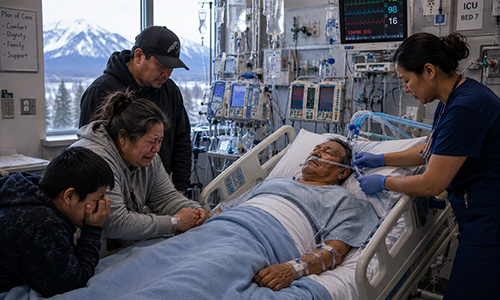
Image generated and modified using ChatGPT – Prompt: An individual in an Alaska hospital after a serious accident with family in attendance.