- Free Consultation: (907) 277-3090 Tap Here to Call Us






Alaska Wrongful Death Claims


Alaska Wrongful Death Claims and Legal Terms: Learn who can bring a claim, understand wrongful death damages, beneficiaries, and meet Alaska deadlines.
Quick Answer
An Alaska wrongful death claim may allow certain family members or the personal representative of a deceased person’s estate to seek compensation when another person’s wrongful act, neglect, or default causes the death. Alaska law establishes who may bring the claim and the losses a court or jury may consider when determining damages. (AS 09.55.580)
Understanding terms such as wrongful death, personal representative, estate, beneficiary, pecuniary loss, loss of support, loss of services, and loss of consortium can help families understand their legal rights after a fatal accident.
What Are Wrongful Death Claims In Alaska?
A wrongful death claim is a civil legal claim arising when a person’s death results from another person’s wrongful act, neglect, or default.
Under Alaska law, the personal representative of the deceased person’s estate may maintain a wrongful death action when the deceased could have maintained an action for personal injury had they survived. (AS 09.55.580)
A wrongful death claim differs from a criminal case. A criminal prosecution seeks to punish unlawful conduct, while a wrongful death lawsuit seeks civil compensation for legally recognized losses resulting from the death.
Who Can Bring A Wrongful Death Claim In Alaska?
The personal representative of the deceased person’s estate generally brings an Alaska wrongful death claim.
Under Alaska law, specific rules determine who may benefit from a wrongful death recovery (AS 09.55.580). Accordingly, the personal representative acts on behalf of the beneficiaries and others who may have a legal interest in the recovery.
Because these rules can depend on the deceased person’s family circumstances, you should not assume that every relative has the same right to recover compensation.
The Personal Representative’s Role In Alaska Wrongful Death Claims
A personal representative is the person authorized to administer a deceased person’s estate.
Depending on the circumstances, the personal representative may be an executor, administrator, or another person appointed or recognized under Alaska probate law.
In a wrongful death case, the personal representative generally serves as the person who brings the legal action. However, the personal representative does not necessarily receive the financial compensation recovery.
Estates
An estate includes the property, rights, and legal interests a person leaves behind after death.
To summarize, the estate may include:
- Real property
- Personal property
- Financial accounts
- Business interests
- Certain legal claims
Understanding the difference between the estate and the beneficiaries is important in a wrongful death case. The estate may have a role in the lawsuit even though the people who benefit from the recovery may be surviving family members.
Beneficiaries
A beneficiary is a person who may receive a benefit from a wrongful death recovery.
Alaska’s wrongful death claim statute provides specific rules governing the distribution of a recovery depending on whether the deceased left a spouse, children, or other dependents. (AS 09.55.580)
For that reason, determining who qualifies as a beneficiary requires examining the deceased person’s family circumstances and the applicable law.
Heirs
An heir is someone who may inherit property from a deceased person under applicable inheritance laws. Furthermore, an heir and a wrongful death beneficiary are not necessarily the same person. Inheritance rights and wrongful death rights involve different legal concepts.
Thus, being an heir does not automatically determine who can benefit from a wrongful death claim.
Wrongful Death Damages
Wrongful death damages compensate eligible beneficiaries for legally recognized losses resulting from a person’s death.
Alaska law identifies several factors that a court or jury may consider when determining wrongful death damages, including:
- Expected financial benefits the deceased would have provided
- Loss of contributions for support
- Loss of assistance or services
- Loss of consortium
- Loss of prospective training and education
- Medical expenses
- Funeral expenses
The amount and types of damages available depend on the facts of the case and the relationship between the deceased and the people seeking compensation.
For a more detailed explanation of economic, noneconomic, and punitive damages, see Alaska Damages And Compensation Explained.
Pecuniary Loss
Pecuniary loss refers generally to financial losses resulting from a person’s death.
In an Alaska wrongful death case, this may include financial benefits that the deceased would reasonably have provided to eligible beneficiaries had they lived.
Evidence may include the deceased person’s:
- Income
- Employment history
- Expected future earnings
- Financial contributions
- Household contributions
- Other sources of economic support
Loss of Support
Loss of support refers to the financial contributions a deceased person would have provided to eligible family members or dependents.
For example, a surviving spouse or child may lose financial support that the deceased would have provided over the person’s expected lifetime.
Alaska law specifically identifies the loss of contributions for support as a factor the court or jury may consider when determining wrongful death damages.
Loss of Services
Loss of services refers to the value of assistance and services the deceased person provided to family members.
Consequently, Loss of Services may include:
- Childcare
- Household assistance
- Home maintenance
- Transportation
- Other contributions with economic value
Alaska’s wrongful death statute specifically allows the court or jury to consider the loss of assistance or services, regardless of the deceased person’s age or relationship to the beneficiary.
Loss of Consortium
Loss of consortium generally refers to the loss of the benefits of a close marital relationship following a spouse’s death.
Alaska’s wrongful death statute identifies loss of consortium as one factor the court or jury may consider when determining damages.
Loss of Guidance and Companionship
A wrongful death can cause losses that extend beyond financial support.
Family members may lose the deceased person’s:
- Guidance
- Care
- Companionship
- Household contributions
- Relationship and support
Hence, the nature and availability of these damages depend on the applicable Alaska law and the circumstances of the case.
Medical and Funeral Expenses
Alaska law allows the court or jury to consider certain medical and funeral expenses when determining wrongful death damages.
Medical expenses may include qualifying treatment provided before death. In addition, funeral expenses may include qualifying costs associated with the person’s burial or other final arrangements.
Therefore, keeping records of these expenses can help document the losses associated with a wrongful death.
Wrongful Death Settlement
A wrongful death settlement is an agreement that resolves a wrongful death claim without a trial.
Before accepting a settlement, the parties may need to address:
- Who has authority to resolve the claim
- Who may benefit from the settlement
- Medical and funeral expenses
- Potential liens or reimbursement claims
- Estate administration issues
- The amount of compensation
- The release of the responsible parties
Because a wrongful death settlement can involve multiple beneficiaries and estate interests, resolving the claim may require more than simply negotiating an amount with an insurance company.
Wrongful Death Lawsuit
A wrongful death lawsuit is a civil action filed to seek compensation for legally recognized losses resulting from a person’s death.
The personal representative generally brings the action under Alaska’s wrongful death statute.
If the parties cannot resolve the claim through negotiation or mediation, the lawsuit may proceed through discovery, depositions, motions, expert testimony, and trial.
For explanations of these procedures, see Alaska Court and Litigation Terms.
Alaska Wrongful Death Claim Statute of Limitations
A statute of limitations establishes the deadline for filing a lawsuit.
Alaska law generally requires a wrongful death action to be commenced within two years after the person’s death.
However, exceptions and other legal rules may affect the deadline in particular circumstances. Because missing a filing deadline can prevent a family from pursuing a claim, promptly determining the applicable deadline is important.
Alaska Wrongful Death and Insurance Claims
Insurance coverage often plays an important role in wrongful death cases.
Consequently, depending on the circumstances, potential sources of compensation may include:
- Automobile liability insurance
- Homeowners or property insurance
- Commercial liability insurance
- Employer or business insurance
- Uninsured or underinsured motorist coverage
- Maritime insurance
- Other applicable policies
Identifying all potentially applicable insurance coverage can become particularly important when multiple parties may share responsibility for the death.
For more information about insurance terminology, see Alaska Insurance Claims.
Wrongful Death Claims After an Alaska Accident
Wrongful death claims can arise from many types of accidents, including:
- Car and truck crashes
- Motorcycle accidents
- Pedestrian accidents
- Boating accidents
- Commercial fishing accidents
- Aviation accidents
- Workplace incidents
- Dangerous property conditions
- Defective products
- Other negligent or wrongful conduct
The laws that apply may vary depending on how and where the death occurred. Maritime and aviation deaths, for example, can involve federal laws that differ from ordinary Alaska personal injury law.
Why Wrongful Death Claim Terms Matter
After a fatal accident, families often must make important legal and financial decisions while dealing with a profound loss. Understanding the terminology can make the process easier to follow.
The most important distinction is often who has the legal right to bring the claim, who may benefit from the recovery, and what losses Alaska law recognizes.
Terms such as personal representative, estate, beneficiary, pecuniary loss, loss of support, and loss of consortium help explain how Alaska wrongful death claims work.
Continue Exploring Alaska Personal Injury Law
Continue exploring this Alaska Personal Injury Glossary series to learn more about:
- Alaska Personal Injury Basics
- Alaska Damages And Compensation Explained
- Alaska Insurance Claims
- Alaska Court and Litigation Terms
- Alaska Maritime Injury Terms
- Alaska Aviation Accident Claims
- Alaska Survival Claims
These articles explain additional legal terminology you may encounter during an Alaska personal injury claim.
Disclaimer: Please note: This article provides general educational information about Alaska wrongful death law. However, it is not legal advice and does not create an attorney-client relationship. Because every case is unique, consult a qualified Alaska personal injury attorney about your specific circumstances.
Johnson Law, P.C. has been helping injured Alaskans and those injured while visiting Alaska for 30 years. It’s who we are. And while we hope you never need us… We’re here if you do. ~ Doug Johnson
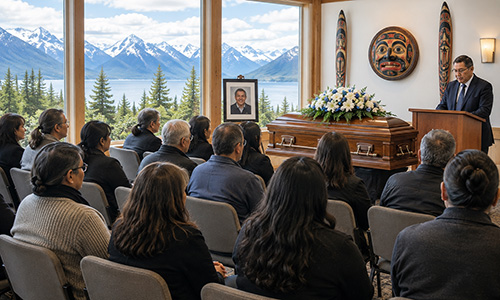
Image generated using ChatGPT – Prompt: Alaskans gathering to mourn the loss of a loved one