- Free Consultation: (907) 277-3090 Tap Here to Call Us





Alaska Insurance Claims


Alaska Insurance and Claims Glossary: Understand liability, UM/UIM, MedPay, policy limits, subrogation, bad faith, and injury claims.
Quick Answer
After an Alaska accident, insurance terms can quickly become confusing. Liability coverage, uninsured and underinsured motorist coverage, Medical Payments coverage, policy limits, subrogation, bad faith, demand letters, and recorded statements can all affect how you pursue an injury claim and the compensation you may receive.
This plain-English glossary explains the insurance terms most commonly used in Alaska personal injury and accident claims. Understanding these terms can help you communicate with insurance companies, evaluate your coverage, and make informed decisions about your claim.
Liability Insurance
Liability insurance helps pay for injuries or property damage that an insured person causes to someone else.
For example, if another driver’s negligence causes your Alaska car accident, the driver’s liability insurance may provide coverage for your injuries and other losses, subject to the policy’s terms and limits.
Alaska law requires most drivers to carry minimum amounts of automobile liability insurance. However, minimum coverage may not fully compensate an injured person after a serious accident.
Liability Coverage
Liability coverage is the portion of an insurance policy that protects an insured person against covered claims brought by others.
In an Alaska personal injury claim, liability coverage may pay for damages when the policyholder caused an accident and the policy covers the resulting losses.
The amount available depends on the policy limits and the facts of the claim.
Uninsured Motorist Coverage (UM)
Uninsured motorist (UM) coverage can provide compensation when an at-fault driver has no automobile liability insurance.
For example, if an uninsured driver causes your Alaska accident, your own UM coverage may help compensate you for covered losses, subject to your policy’s terms and limits.
Underinsured Motorist Coverage (UIM)
Underinsured motorist (UIM) coverage may provide additional compensation when the at-fault driver’s liability insurance does not provide enough coverage to pay for your damages.
For example, suppose another driver carries $50,000 in liability coverage but your injuries and other damages exceed that amount. Depending on your policy, UIM coverage may help cover some of the remaining losses.
UM and UIM coverage can become especially important when an accident causes serious or permanent injuries.
Medical Payments Coverage (MedPay)
Medical Payments coverage, commonly called MedPay, can help pay certain medical expenses resulting from a covered accident, regardless of who caused the accident.
Depending on the policy, MedPay may help cover expenses such as:
- Emergency treatment
- Hospital bills
- Doctor visits
- Diagnostic testing
- Medical transportation
- Other covered medical expenses
MedPay coverage differs from liability insurance because you may be able to use your own MedPay coverage even when another person caused the accident.
What Does Policy Limits Mean In Alaska Insurance Claims?
Policy limits are the maximum amounts an insurance company will pay under a policy for a covered claim.
For example, an auto insurance policy may establish separate limits for bodily injury and property damage.
Policy limits can significantly affect an Alaska personal injury claim. When an injury claim exceeds the at-fault driver’s available insurance coverage, other sources of compensation may become important, including UM/UIM coverage or additional insurance policies.
What Does Coverage Mean In Alaska Insurance Claims?
Insurance coverage determines whether a particular policy applies to a specific accident, injury, or loss.
Coverage questions can become complicated because insurance policies contain exclusions, conditions, definitions, endorsements, and limits.
As a result, you should not assume that an insurance company has correctly interpreted your policy simply because it denies coverage.
Insurance Adjuster
An insurance adjuster investigates claims for an insurance company. The adjuster may review accident reports, medical records, photographs, witness statements, and other evidence before determining how the insurer will handle the claim.
Remember that an adjuster works for the insurance company. The adjuster’s role is to evaluate the claim under the applicable policy—not to provide you with legal advice.
Why Does The Insurance Company Want My Recorded Statement?
A recorded statement is an interview that an insurance company records to obtain information about an accident or injury.
An adjuster may ask you to describe:
- How the accident happened
- What injuries you suffered
- When your symptoms began
- What medical treatment you received
- Whether you had previous injuries
Before providing a recorded statement, understand what information the insurer seeks and why it wants the statement. A statement can become evidence in a later dispute about liability, coverage, or damages.
Demand Letters In Alaska Insurance Claims
A demand letter is a written request for an insurance company or opposing party to pay a specific amount to resolve a personal injury claim.
A well-supported demand typically explains:
- How the accident occurred
- Why the other party is responsible
- The injuries suffered
- Medical treatment
- Lost income
- Other financial losses
- Pain and suffering
- The amount requested to resolve the claim
A demand letter does not guarantee a settlement. Instead, it usually begins or advances settlement negotiations.
Settlements In Alaska Insurance Claims
An insurance settlement is an agreement in which an insurer or responsible party pays compensation to resolve a claim.
Before accepting a settlement, consider whether the payment adequately addresses your current and future losses. Serious injuries may require ongoing medical treatment, affect your ability to work, or cause permanent limitations.
In many cases, signing a settlement agreement also requires you to release the responsible party and insurer from further claims arising from the accident.
What Is Subrogation In An Alaska Insurance Claim?
Subrogation occurs when an insurance company or another party seeks reimbursement from a person or settlement after paying certain expenses related to an injury or loss.
For example, your health insurer may pay medical bills after an accident and later seek reimbursement from a settlement you receive from the person responsible for your injuries.
Subrogation rights can affect the amount of money you ultimately receive from a personal injury settlement.
Insurance Lien
An insurance lien is a legal claim for reimbursement against money recovered from a personal injury settlement or judgment.
Health insurers, government programs, or other entities may have reimbursement rights depending on the circumstances.
Because liens can reduce the amount of compensation an injured person receives, you should identify and address potential liens before finalizing a settlement.
Insurance Bad Faith
The term Insurance Bad Faith generally refers to an insurer’s failure to handle a claim fairly or in accordance with its legal obligations.
Insurance disputes can involve questions about:
- Unreasonable claim delays
- Improper claim handling
- Coverage disputes
- Failure to investigate
- Unreasonable settlement practices
Whether an insurer acted in bad faith depends on the facts, the insurance policy, and applicable Alaska law.
Coverage Disputes In Alaska Insurance Claims
A coverage dispute occurs when an insurance company and policyholder or claimant disagree about whether an insurance policy covers a particular accident, injury, or loss.
Coverage disputes may involve:
- Policy exclusions
- Policy limits
- Whether a person qualifies as an insured
- Whether an accident falls within the policy
- Uninsured or underinsured motorist coverage
- The insurer’s interpretation of policy language
Because insurance policies are contracts, the exact language of the policy can become critical.
Claim
An insurance claim is a request for an insurance company to provide benefits or compensation under an insurance policy.
After an Alaska accident, you may have more than one potential insurance claim. Depending on the circumstances, these could include a claim against the at-fault driver’s liability insurance and a claim under your own UM/UIM or MedPay coverage.
Identifying all available insurance coverage can therefore become an important part of evaluating an injury claim.
Why Alaska Insurance Terms Matter
Insurance terminology can directly affect your ability to recover compensation after an Alaska accident. Understanding the difference between liability coverage, UM/UIM coverage, MedPay, policy limits, subrogation, and other insurance concepts can help you recognize potential sources of compensation and understand the decisions an insurance company makes.
At the same time, insurance policies and injury claims can involve complicated legal and factual issues. The terms used by an insurance company do not necessarily determine your legal rights.
Continue Exploring Alaska Personal Injury Law
Continue exploring this Alaska Personal Injury Glossary series to learn more about:
- Alaska Personal Injury Basics
- Alaska Damages And Compensation Explained
- Alaska Court And Litigation Terms
- Alaska Maritime Injury Terms
- Alaska Aviation Accident Claims
- Alaska Wrongful Death Claims
- Alaska Survival Claims
These articles explain additional legal terminology you may encounter during an Alaska personal injury claim.
Disclaimer: Please note: This article provides general educational information about Alaska insurance and personal injury law. However, it is not legal advice and does not create an attorney-client relationship. Because every case is unique, consult a qualified Alaska personal injury attorney about your specific circumstances.
Johnson Law, P.C. has been helping injured Alaskans and those injured while visiting Alaska for 30 years. It’s who we are. And while we hope you never need us… We’re here if you do. ~ Doug Johnson
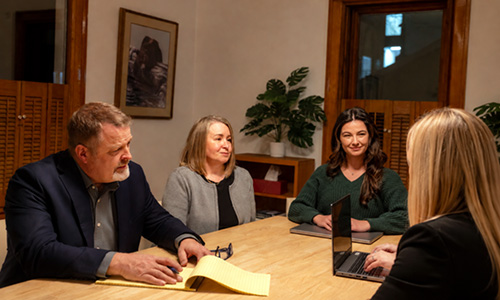
Image generated using ChatGPT – Prompt: Doug Johnson and Johnson Law staff, Kate Turner, Paralegal and Jaycee Gauman, Case Manager meeting an Alaska Personal Injury Client In Johnson Law’s Anchorage Offices